

From the SRP Editor site:
Part One
Writers love books about writing almost as much as they love buying notebooks they’ll never use.
We collect craft books with the best of intentions. We underline passages. We nod thoughtfully. We place sticky notes with the seriousness of surgeons preparing for an operation.
And then, far too often, we put them on the shelf and go back to guessing.
I’m as guilty as anyone.
But over the years, three books have earned permanent residence beside my desk—not because they make me feel clever, but because I actually return to them while writing and editing. Not once. Repeatedly. They are:
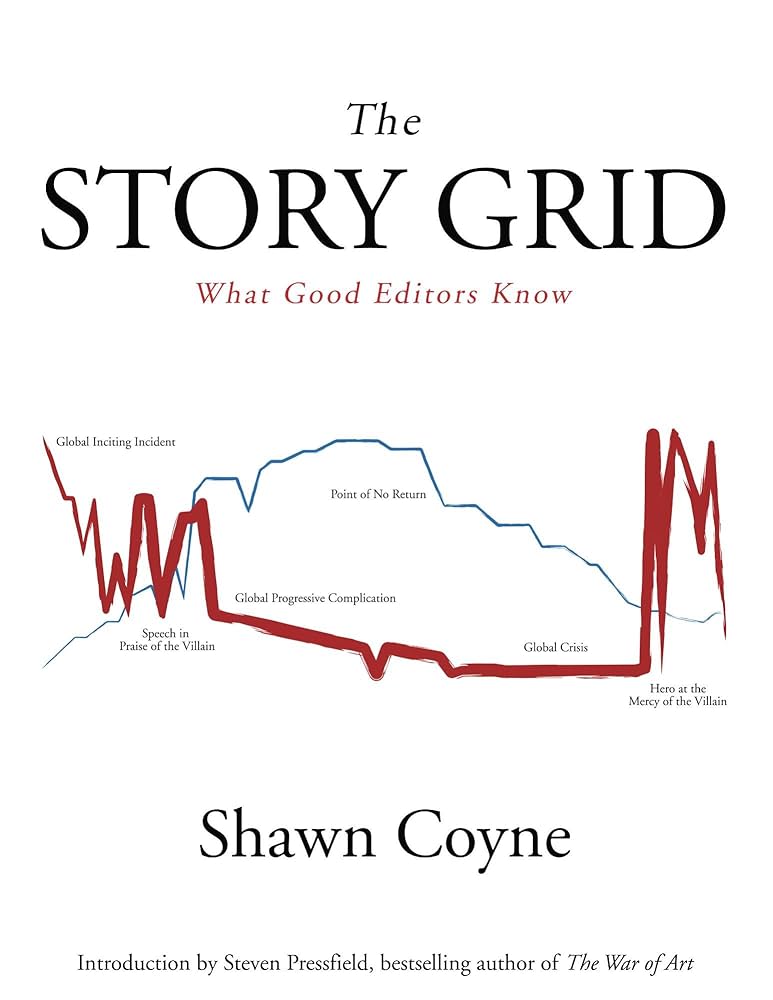
- The Story Grid by Shawn Coyne
- Story by Robert McKee
- The Writer’s Journey by Christopher Vogler
These aren’t “read once and absorb by osmosis” books. They’re working tools. Diagnostic tools. Rescue tools. The kind of books you reach for when a manuscript has gone sideways, a scene feels dead, or a story is refusing to become what it ought to be.
Over the next three posts, I’m going to talk about each one—what it does well, why I use it, where it helps most, and why I think writers would be wise to spend time with it. Because inspiration is lovely. But structure is what gets you to the end.
Why The Story Grid by Shawn Coyne Lives Beside My Desk
If writing advice were a dinner party, a lot of books would tell charming stories, quote famous authors, and refill your wine glass. The Story Grid would quietly slide into the chair beside you, look at your manuscript, and say, “Here’s why this isn’t working.” Which is exactly why I value it.
Shawn Coyne’s core premise is simple: stories succeed or fail scene by scene. If enough scenes don’t work, the book doesn’t work. Brutal, efficient, and annoyingly true. What makes The Story Grid so useful is that it gives writers a practical way to diagnose problems instead of merely suffering from them.
- Scene dragging?
- Stakes unclear?
- Nothing changes?
- Characters reacting instead of acting?
- Middle of the book feels like wet cardboard?
There are reasons for these things, and better yet, there are fixes.
One of the concepts I return to most often is the necessity of movement within a scene. Something must shift. Value must change. A scene should not begin and end in the same emotional, strategic, or narrative place. If it does, you may have written prose, but you haven’t written story.
That alone can save a manuscript from bloat.
I also appreciate that The Story Grid treats storytelling as craft, not magic. Talent matters, yes. Voice matters. But structure matters too, and pretending otherwise is how writers end up with beautiful chapters inside broken books.
Now, fair warning: this is not beach reading. You won’t float through it on vibes and affirmation. It asks you to think, work, analyze, and occasionally accept that your brilliant chapter may in fact be a decorative cul-de-sac. Healthy for the soul.
If you’re a writer who keeps feeling that something is wrong but can’t name what it is, The Story Grid can hand you a flashlight. And sometimes that’s worth more than inspiration.
–Mark