Science Fiction

When “Agentic” Suddenly Became a Thing

Why has “agentic AI” suddenly become the term everyone’s using? What looks like an overnight trend is really the visible edge of a rapid shift—from passive tools to systems that can act, decide, and iterate. For science fiction readers, it’s a familiar moment: the future we’ve long imagined beginning to take shape, with all the promise—and unease—that implies.

Why Star Wars Endures

Star Wars has been part of my life for as long as I can remember—and, in a very real way, it helped shape my career as a writer. But decades on, the question isn’t why it began. It’s why it never seems to end. As new generations discover it and older ones drift away, Star Wars continues to renew itself in ways that are both familiar and puzzling.

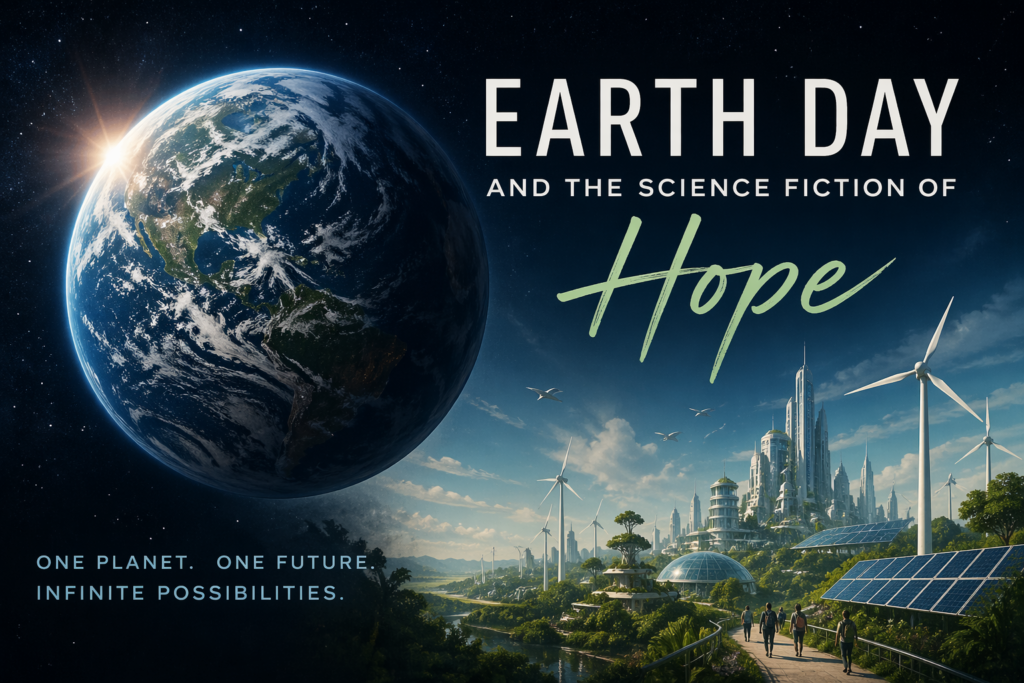
Earth Day and the Science Fiction of Hope

On Earth Day, science fiction reminds us that environmental collapse is not the only possible future. From Frank Herbert’s Dune to modern Solarpunk stories like Winds of Change, SF has always offered both a warning and a hope: that science, ingenuity, and the human spirit can help us protect our one blue world—and perhaps one day carry that wisdom to the stars.

New Release: THE WOMAN WHO REMEMBERED YESTERDAY by Cameron Cooper

In this new novelette, Cameron Cooper delivers a thought-provoking and emotionally resonant story that explores the fragile nature of memory—and what happens when it begins to fail on a broader scale.

This is not a story of sudden catastrophe, but of quiet erosion. As memories begin to slip and connections fade, the question becomes not just what is being forgotten—but who.

The Librarians Who Opened the Universe

When I was twelve, I discovered both libraries and science fiction at the same time. The dusty anthologies, John Wyndham, and the town librarians who always knew exactly what I should read next opened an entire universe for me. For Librarian Day, a thank you to the people who quietly changed my life one book at a time.

Space Is Bigger Than We Think

Excerpt: Science fiction readers are among the people most likely to underestimate the true scale of space. We are so accustomed to faster-than-light drives, wormholes and jump gates that we forget how impossably vast the distances between stars really are. But once a writer decides how long it takes to cross those distances, every other aspect of the story changes—from politics and trade to war, culture and the kinds of stories that can be told at all.

Meanwhile, Back at Stories Rule Press…

The first quarter of the year has disappeared in a blur of drafts, edits, releases and looming deadlines—business as usual at Stories Rule Press. Mark is deep into the next Thomas Billings thriller, Tracy is preparing new fiction and nonfiction releases, Taylen is starting an all-new fantasy series, and Cameron has another big-concept science fiction novel on the horizon. Different genres, different voices, same mission: story comes first. Always.

Sci-Fi Movies to Watch in 2026 (and Why This Year Feels Different)

Science fiction cinema in 2026 isn’t following the usual blockbuster script. Instead of obvious juggernauts, the year is shaping up to be a mix of risky adaptations, franchise experiments, and quieter films that could surprise everyone. From Project Hail Mary to lesser-known titles flying under the radar, this may be the year sci-fi stops playing it safe—and starts getting interesting again.

From TV Series to Movie Screen: Will The Mandalorian and Grogu Work?

Lucasfilm is moving The Mandalorian from Disney+ to the big screen with The Mandalorian and Grogu. But will audiences follow the story from TV to theaters? With many viewers now preferring streaming at home—and with the series built around character arcs rather than blockbuster spectacle—the shift raises an interesting question: are TV and film audiences really interchangeable anymore?

Shopping Basket
Scroll to Top