

Rogue Star releases one week from today.
Rogue Star releases in one week. Rather than tell you more about Danny Andela’s latest troubles, here’s your chance to read the complete first chapter.
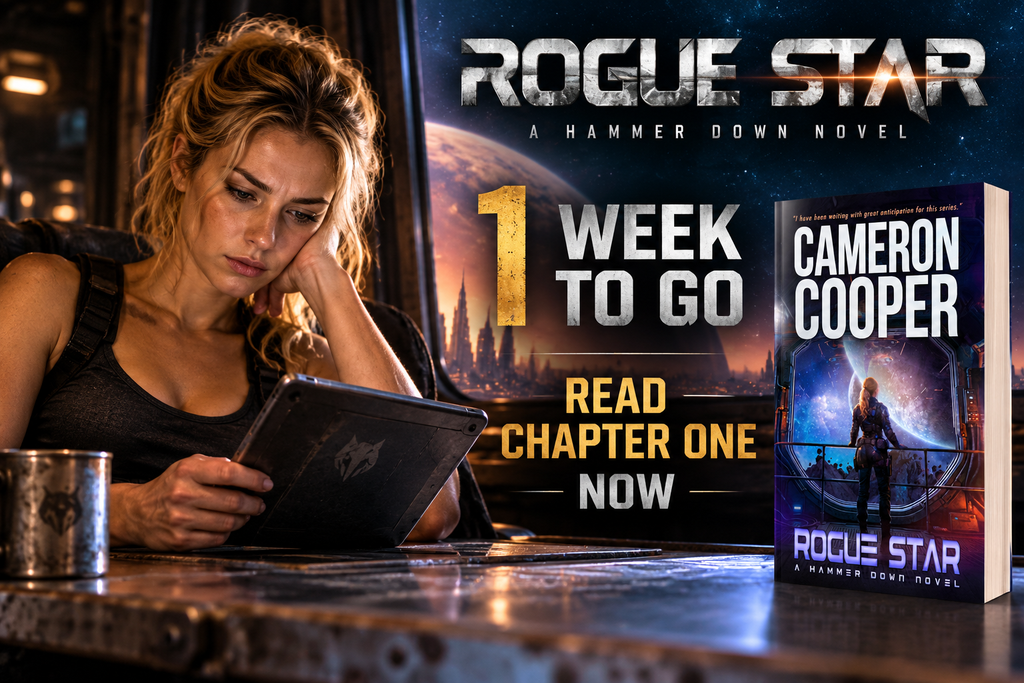
Rogue Star releases in one week. Rather than tell you more about Danny Andela’s latest troubles, here’s your chance to read the complete first chapter.

Danny Hammer has survived wars, death and political upheaval. But now she’s broke, homeless, and her hungry parawolf has priorities of her own.
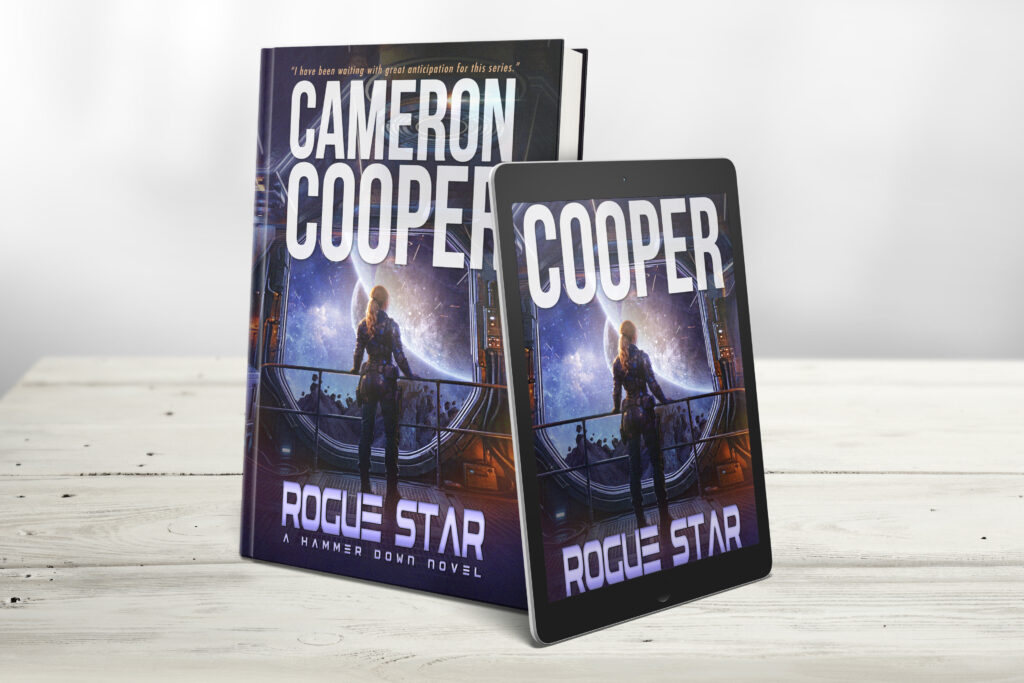
Danny Andela has spent decades being the person who spots trouble before everyone else. But what happens when no one believes her—and she can no longer entirely trust herself? ROGUE STAR, Book 2.0 of Hammer Down, is now available for preorder.
Every reader matters, no matter where they buy our books. But direct sales give independent publishers something special: the ability to invest more in new stories, create exclusive editions, and build stronger relationships with readers. Here’s why buying direct makes such a difference.
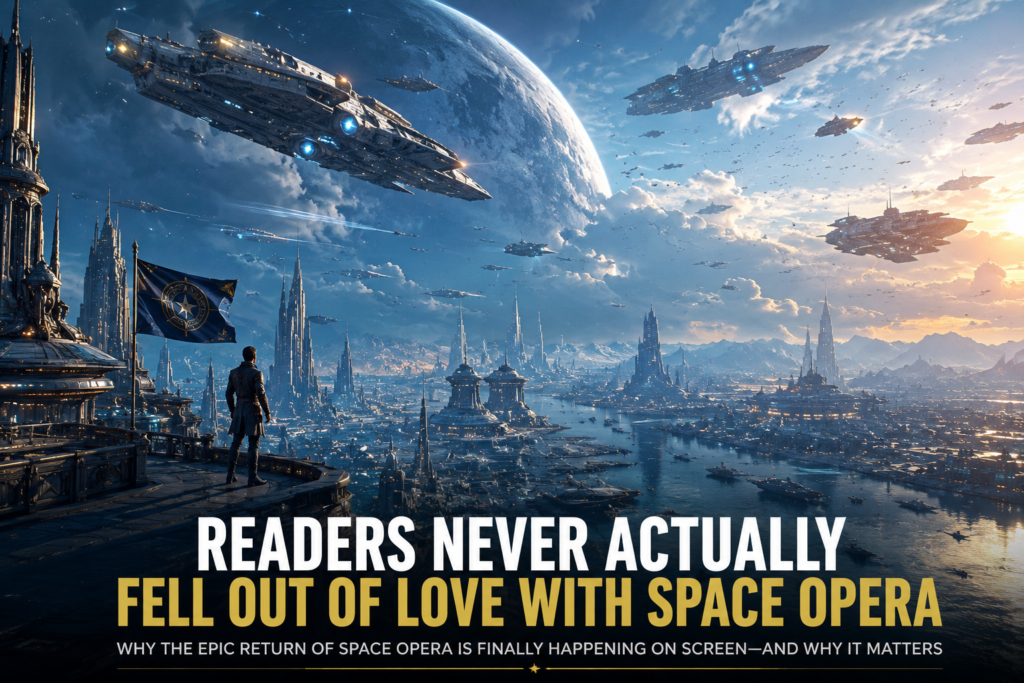
For years, science fiction seemed determined to convince us the future would be smaller, darker, and more cynical than the present. But readers never actually abandoned space opera. They still wanted starships, exploration, galactic civilizations, and futures worth fighting for. Now, as film, television, and publishing slowly rediscover large-scale science fiction, it feels like space opera is finally stepping back into the spotlight — jet packs and all.
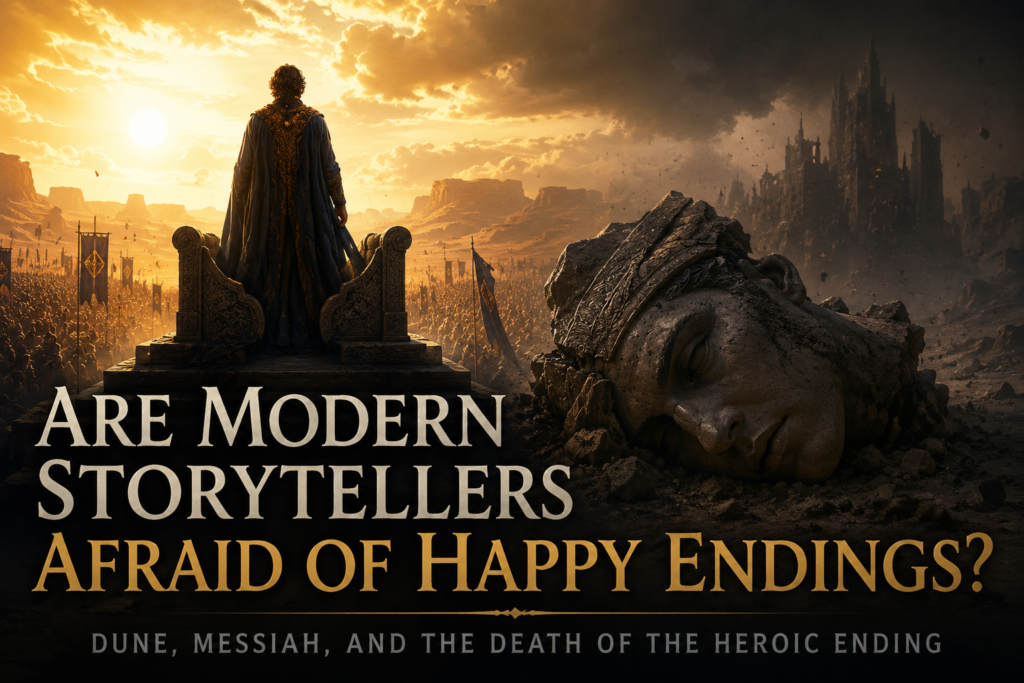
The new Dune 3 trailer should have filled me with anticipation. Instead, it left me uneasy. Not because Denis Villeneuve lacks skill as a filmmaker—far from it—but because the films seem determined to undercut Paul Atreides’ triumph before it ever truly lands. Which raises a larger question: Have modern storytellers become afraid of heroic endings? From Dune to grimdark fantasy to prestige science fiction, modern stories increasingly distrust hope, sincerity, and unapologetic victory. But is that really what audiences want—or simply what the industry keeps giving them?
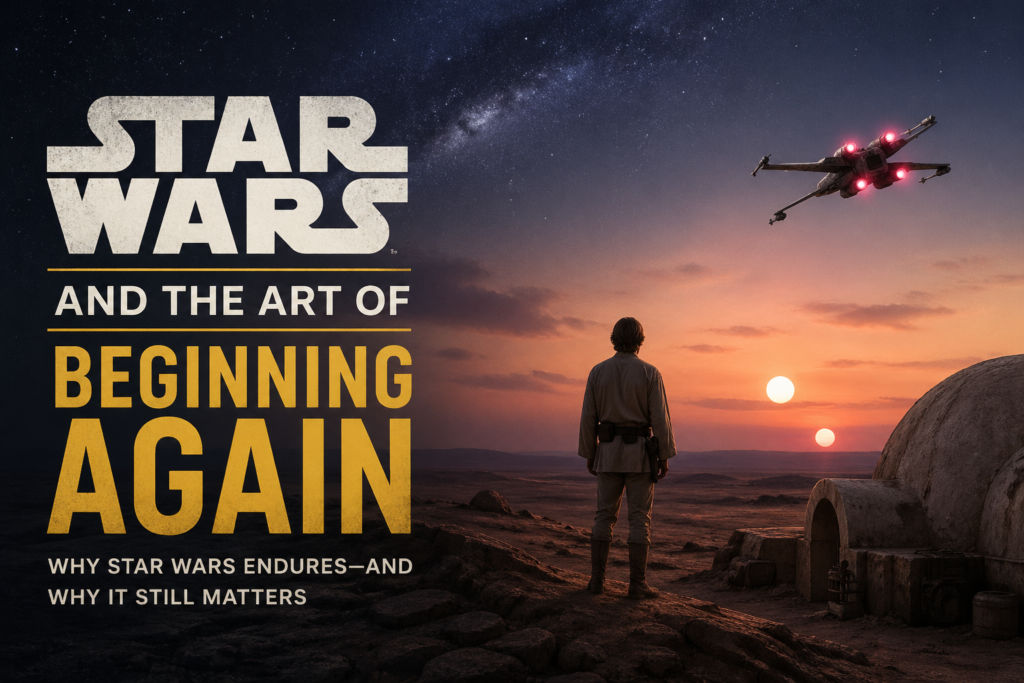
Star Wars has been part of my life for as long as I can remember—and, in a very real way, it helped shape my career as a writer. But decades on, the question isn’t why it began. It’s why it never seems to end. As new generations discover it and older ones drift away, Star Wars continues to renew itself in ways that are both familiar and puzzling.
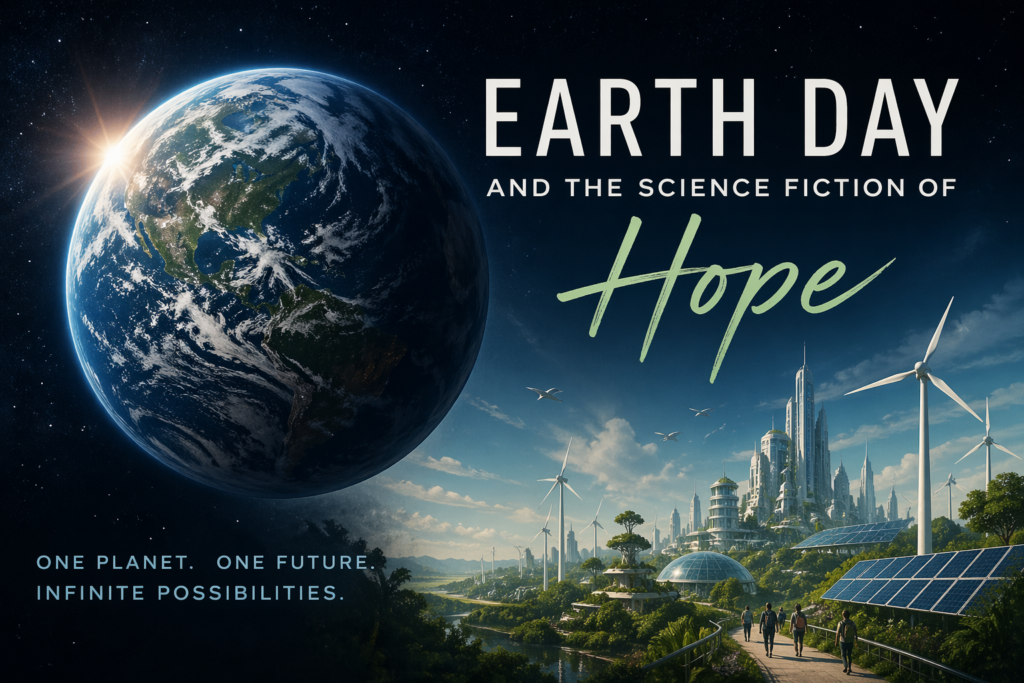
On Earth Day, science fiction reminds us that environmental collapse is not the only possible future. From Frank Herbert’s Dune to modern Solarpunk stories like Winds of Change, SF has always offered both a warning and a hope: that science, ingenuity, and the human spirit can help us protect our one blue world—and perhaps one day carry that wisdom to the stars.
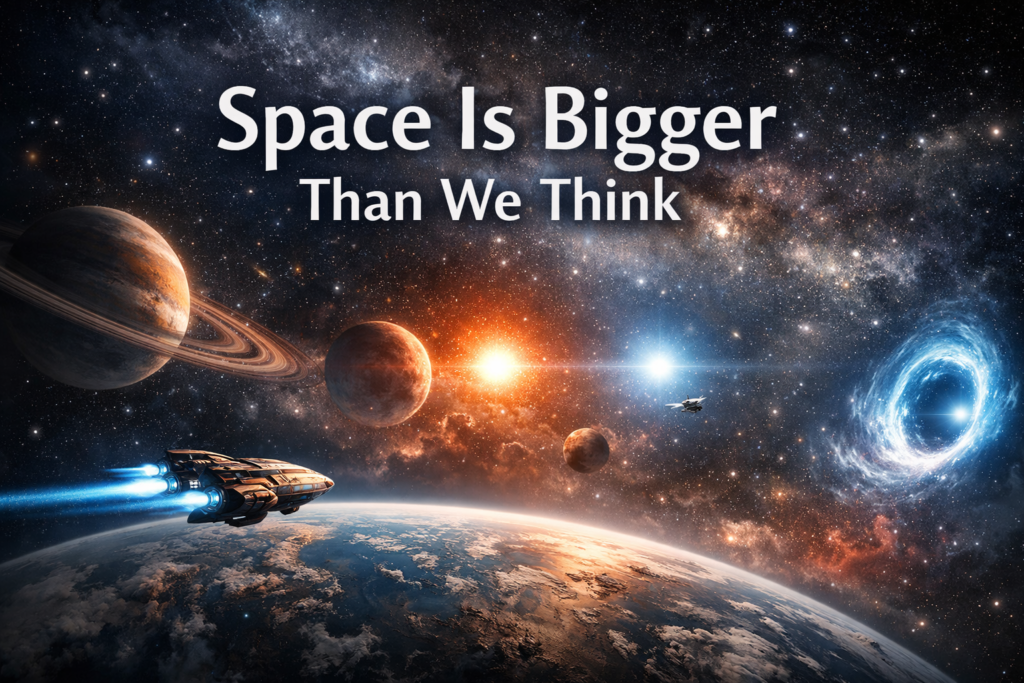
Excerpt: Science fiction readers are among the people most likely to underestimate the true scale of space. We are so accustomed to faster-than-light drives, wormholes and jump gates that we forget how impossably vast the distances between stars really are. But once a writer decides how long it takes to cross those distances, every other aspect of the story changes—from politics and trade to war, culture and the kinds of stories that can be told at all.
I sat down with a simple goal: find something new to read. Not search for a specific title. Not hunt down an author I already knew. Just browse — the way readers have always done. Twenty minutes later, I gave up. Not because there aren’t books, but because real discovery has quietly vanished. What used to be shelves are now funnels, and finding new science fiction online has become far harder than it should be.