

Just before we get started with today’s post, I wanted to remind you:
The Annual SRP Black Friday sale starts tomorrow!
Four days. 30% off ALL ebook and paperback bundles, PLUS double loyalty points! The sale starts November 27 and ends November 30.
Use coupon code BFCM2026 at checkout.
Get ready to stock up on great stories!
From the blog of Stories Rule Press author Mark Posey.
The Things We’ll Never Know — Part Five
Have you ever had someone tell you something you absolutely did not want to hear, only to discover that they were right?
It’s an irritating experience. Particularly when the person delivering the advice is someone who has been waiting for the opportunity. You can almost see the satisfaction on their face as they explain, in considerable detail, exactly where you’ve gone wrong.
Of course, there’s a difference between someone who enjoys being right and someone who cares enough about you to say something uncomfortable. Unfortunately, when we’re on the receiving end, the two can look remarkably similar. And sometimes the person who cares about us isn’t especially interested in being diplomatic.
In The Summer Garden, Evelyn is a woman with opinions. Lots of them. She has opinions about gardening, about how other people garden, about how the community garden should be run, and about practically anything else that comes within range. She’s also generous with those opinions, whether anyone has asked for them or not.
Scotty discovers this shortly after taking over Plot Seventeen. He wants to grow tomatoes, and Evelyn is more than willing to explain how he should go about it. Their relationship develops into a familiar exchange of advice, disagreement, and the occasional pointed observation.
But as the summer progresses, something changes. Beneath all the debating, they begin to care about each other, which becomes particularly important when the weather turns dangerously hot.
Evelyn is determined to keep working in the garden despite the heat. There are things that need doing, and she’s not the sort of person who considers a little discomfort a legitimate reason to abandon a task.
Unfortunately, the heat has other ideas.
When Evelyn becomes unsteady, Scotty is close enough to catch her. Suddenly, the woman who has spent the summer telling everyone else what to do is the person who needs help.
It’s frightening. Evelyn is taken home by her daughter and later sees a doctor, who tells her to rest, drink plenty of fluids, and stay away from the garden for several days. Evelyn agrees, at least while her daughter is listening.
Nobody is particularly convinced.
The incident shakes everyone, especially Scotty. He knows how close they came to something much worse, and he isn’t eager to repeat the experience. Nora responds by introducing new rules. Nobody works alone. Everyone takes a break every twenty minutes. The garden closes at ten in the morning, before the worst of the heat arrives.
Predictably, not everyone appreciates being told what to do. Nora doesn’t care. Connie adds a kitchen timer to the picnic table. When it rings and everyone ignores it, she produces a handbell and orders them to sit down.
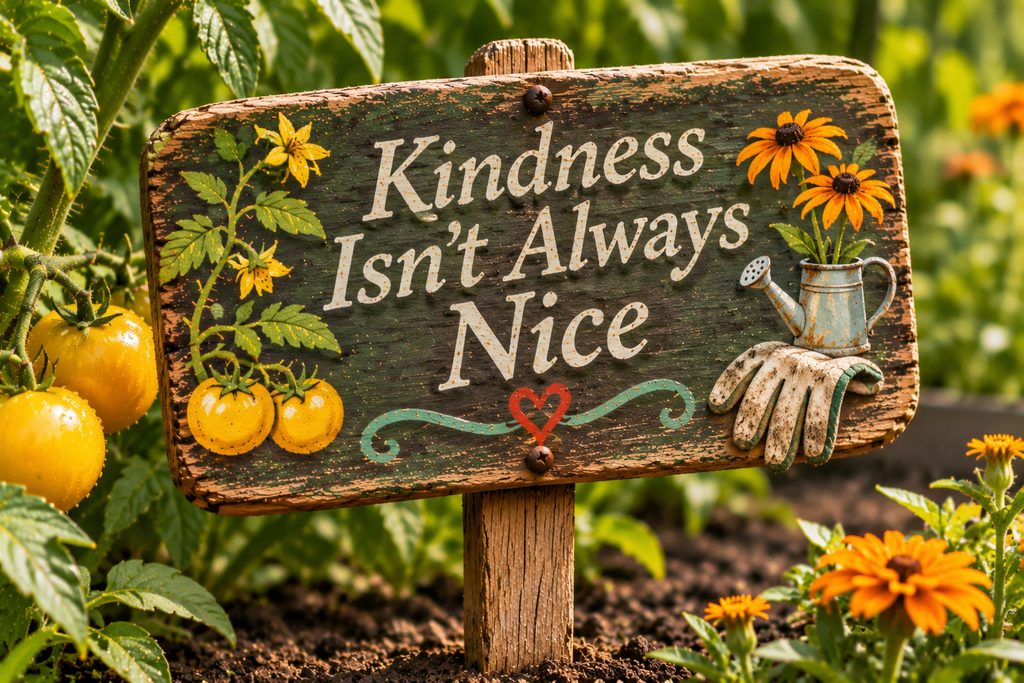
This is what passes for kindness at Mill Creek.
What I particularly like about this episode is that Scotty isn’t entirely innocent of the behaviour that nearly gets Evelyn into serious trouble.
Afterward, he remembers how Anne used to complain about his habit of working too long, skipping meals, and refusing help when something needed doing. She once told him that a task didn’t become more noble simply because he exhausted himself doing it.
He’d argued, naturally. He had things to do.
Anne wasn’t impressed.
It’s a lovely little reminder that we’re often remarkably good at recognizing foolish behaviour in other people while remaining completely blind to it in ourselves. Scotty could see that Evelyn needs to slow down. Evelyn could identify half a dozen things Scotty ought to be doing differently before breakfast.
Neither is particularly eager to be corrected. But that doesn’t mean the corrections aren’t necessary.
I think most of us have been on both sides of this particular fence.
We’ve watched someone we care about make a decision we know is going to hurt them. We’ve tried gentle suggestions, carefully worded questions, and the occasional pointed hint. Sometimes those approaches work. Other times, the person carries on doing exactly what they were doing before.
And eventually, we find ourselves saying something considerably less gentle. The trouble is that being told we’re wrong rarely feels like an act of kindness. It can feel like criticism, interference, or an accusation that we’re incapable of managing our own lives. Our first instinct is often to defend ourselves, even when we suspect the other person has a point.
Of course, not every unsolicited opinion is an act of kindness. Some people really do enjoy interfering, and being concerned about someone doesn’t give us permission to run their lives. But there’s a difference between trying to control someone and refusing to stand quietly by while they put themselves in danger.
Sometimes caring about someone means risking an argument.
When Evelyn returns to the garden, the others make it abundantly clear that she isn’t going to resume working as though nothing happened. There’s a chair waiting for her, water close at hand, and a collection of people determined to make sure she stays put.
Evelyn, being Evelyn, finds ways to supervise from her chair. She even has opinions about the punctuation on Nora’s posted rules. Nobody is especially surprised. And nobody seems inclined to surrender.
There’s something rather wonderful about that. The gardeners aren’t trying to change Evelyn into someone more agreeable. They know exactly who she is, and they care about her anyway. Enough to argue with her, to insist she take care of herself, and to put up with the inevitable complaints. Because they’d much rather have Evelyn sitting in a chair telling them they’re doing everything wrong than face the possibility of a garden without her.
So here’s the question: Why do we sometimes mistake kindness for interference when someone tells us something we don’t want to hear?
Perhaps because kindness doesn’t always sound like encouragement.
Sometimes it sounds suspiciously like someone ringing a handbell and telling us to sit down.
Come Spend a Summer in the Garden
When Scotty moved into his new condo, the community garden across the street was one of its attractions. What he hadn’t anticipated was how much the people he met there would change his life.
The Summer Garden is a novel about unexpected friendships, grief, second chances, and discovering that it’s never too late to find somewhere you belong.
Curious? Start with the story.
Read A Handful of Dirt, the opening episode of The Summer Garden, free.
Ready for the whole summer?
Discover The Summer Garden at Stories Rule Press.
Releasing December 3, 2026, in ebook, paperback, and Deluxe Special Edition.
The Deluxe Special Edition is available exclusively from Stories Rule Press and includes a complimentary ebook with purchase.