

From the SRP Editor site:
One of the most common issues I encounter when editing manuscripts isn’t poor writing, weak dialogue, or even plot holes. It’s that the author hasn’t yet discovered what their story is really about.
On the surface, every story is about something. A detective solving a murder. A spaceship crew saving a colony. A young woman falling in love. A retired man planting tomatoes.
Those are the events of the story. They’re important, of course. Readers need something to happen. They need characters making decisions, facing obstacles, and pursuing goals.
But the stories that stay with us long after we’ve finished reading usually have something else going on beneath the surface. The detective story might actually be about justice. The space adventure might be about sacrifice. The romance might be about learning to trust again.
And the story about tomatoes? That one might not be about tomatoes at all.
When I’m editing, I often ask authors a simple question: “What is this story really about?” Not the plot. Not the premise. Not the back-cover copy.
What is the deeper story? Sometimes the author knows immediately. More often, they hesitate. That’s because many writers don’t discover the deeper story until they’re well into the manuscript. Some don’t recognize it until they’ve finished the first draft.
And that’s perfectly normal.
Stories have a way of revealing themselves. You start out writing about one thing and gradually realize you’ve been writing about something else all along. I’ve experienced this myself countless times.
A story begins with an interesting situation, a compelling character, or a simple “what if?” question. Then somewhere along the way, another layer emerges. Themes begin connecting. Character decisions take on greater meaning. The story starts asking larger questions.
That’s when it becomes more than a sequence of events. That’s when it begins to resonate.
As editors, one of the most valuable things we can do is help authors identify that deeper layer and strengthen it. Once you know what the story is really about, you can reinforce it throughout the manuscript. Scenes gain focus. Character arcs become clearer. Endings become more satisfying because they resolve not only the plot but the emotional journey underneath it.
If you’re struggling with a manuscript, try asking yourself this question: Beyond the events on the page, what is my story really about? The answer may already be there. You just haven’t noticed it yet.
_________
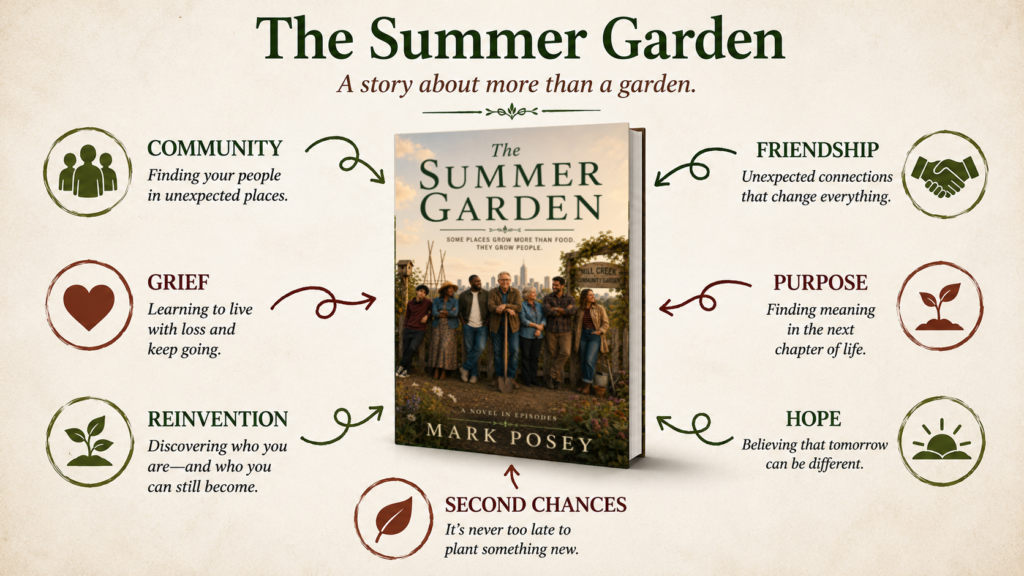
Interestingly, The Summer Garden began as a simple story about a retired man joining a community garden. It didn’t take long before I discovered the deeper story hiding underneath—the one about grief, purpose, friendship, and starting over after loss.
If you’d like to see what I mean by finding the story beneath the story, the serial is currently running on Substack, with new episodes appearing every Sunday.
–Mark