Author name: Tracy at The Productive Indie Fiction Writer

The 5-Minute Brain Dump That Can Instantly Get You Back to Writing

Excerpt: Writers don’t usually suffer from a lack of ideas—we suffer from too many. Between errands, reminders, story ideas, and random questions, our brains can become so cluttered that writing feels impossible. Here’s how a simple five-minute “brain dump” can clear the mental noise, help you focus, and get you back into the flow of writing.

The Magic Cookie Method of Writing Motivation

When writing starts to drag, the problem often isn’t laziness or lack of discipline — it’s that you’ve lost sight of what you’re writing toward. In this post, I explore the “magic cookie” method: finding the one scene, moment, or beat in your story that excites you enough to pull you through the difficult middle. Because sometimes the best cure for procrastination is knowing there’s something wonderful waiting a few chapters ahead.

Safe Writing Is Dangerous Now. Here’s What to Write Instead.

Readers do not know what they want until they see it. They cannot ask for the strange combination, the odd obsession, or the idea that should not work but somehow does. That is your advantage. The books that stand out now will not be the safest ones. They will be the ones only you could have written.

Can’t Reach Flow State? This Might Be Why

Struggling to reach flow when you write? It might not be a discipline problem. Flow isn’t just about focus—it’s about whether your brain trusts that everything else is handled. If your mind is still tracking loose ends, unfinished tasks, or “don’t forget this” thoughts, it won’t let go. And without that mental quiet, true immersion in your story stays just out of reach.

Build Better Habits (Not Better Goals)

Goals feel productive. Habits are productive. If you want to be a producing indie author, you don’t need a shinier goal — you need a quieter, more consistent life. The writers who finish books aren’t chasing outcomes; they’re protecting routines. It may look boring from the outside. Good. That “nothing to report” life? That’s exactly what makes the words pile up.

You’re Not Bad at Writing. Publishing Is Hostile to Story.

Storytelling hasn’t failed readers — publishing culture has simply become suspicious of it. If you’re being told to slow down, soften conflict, or “let the story breathe,” the problem may not be your writing at all. It may be that you’re telling stories in a moment that prefers experience over consequence.

The Easy Way To… (Get Ripped Off)

Everyone’s teaching authors how to spot scammers with lists of red flags and warning signs. But none of that works if your mindset is wrong. Because if part of you still wants the “easy way,” you’ll explain away every clue. Here’s why modern scams work — and the one shift that makes you almost impossible to fool.

Trad vs Indie in 2026, Part III

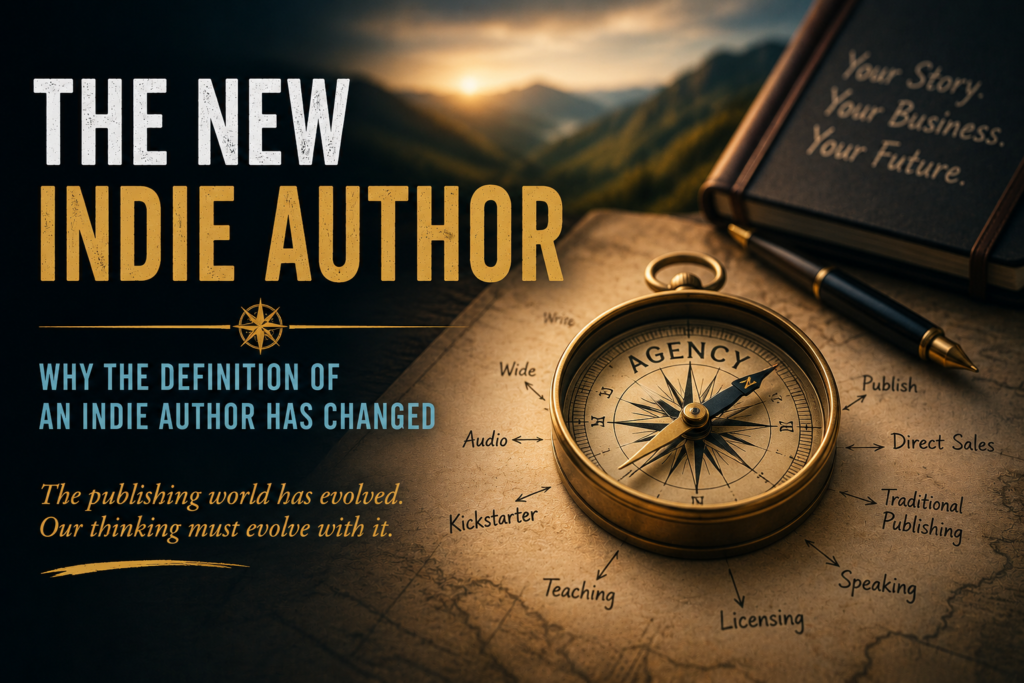
Most authors aren’t confused about how traditional and indie publishing work. They’re confused because they’re emotionally attached to what they want those systems to be. In 2026, choosing between trad, indie, or anything resembling “hybrid” isn’t about legitimacy or dreams of a writing career. It’s about understanding which system you’re willing to depend on — corporations behaving well, or yourself. This is the part nobody says out loud.

Trad vs Indie in 2026, Part II

If Part I was the brutal, unsentimental comparison of trad vs indie — advantages, disadvantages, and the cold math of each — then Part II shifts gears completely. Part II dives into what modern indie publishing actually looks like in 2026, because most writers still imagine the 2013 version: KU gold rushes, cheap ads, write-to-market hamster wheels, and algorithmic rituals. That world is gone. Today’s indie career is a full business model built on direct sales, diversified income, long-tail backlist revenue, platform resilience, and storytelling that can’t be replicated by AI. If you don’t understand this version of indie, you can’t choose your publishing path intelligently — and Part II lays it out without sentimentality, delusion, or nostalgia.

Shopping Basket
Scroll to Top