Tracy Cooper-Posey

The City With No Spare Inch

An entire capital city packed onto a single tiny island in the middle of the Indian Ocean, with barely an inch to spare. Looking at aerial photos of Malé, the capital of the Maldives, it’s impossible not to wonder about the fragility of cities, civilization, and the strange places human beings insist upon calling home.

Should You Blog? A Solar Sail Theory Answer

Every few years, someone declares that blogging is dead. Usually loudly. Usually confidently. Usually while selling a course about the thing you’re supposedly meant to do instead.

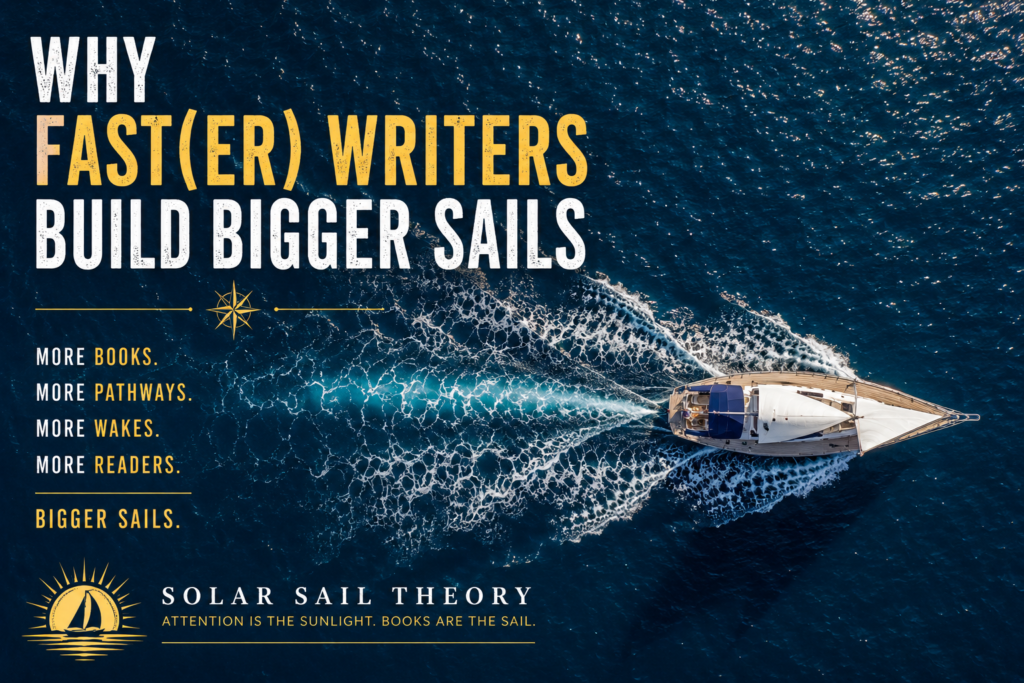
But Solar Sail Theory asks a different question entirely: not whether blogging is fashionable, but whether it strengthens your discoverability surface area. In an era of disappearing social posts, algorithmic chaos, and AI-mediated search, blogging may be less about going viral—and more about building durable infrastructure that compounds over time.

Finding Great Books Shouldn’t Be So Hard

Finding a genuinely good book is becoming harder—not because great stories no longer exist, but because readers are being buried under rushed, low-quality content designed to game algorithms instead of move people. At Stories Rule Press, every book is still built the old-fashioned way: by real authors who care deeply about storytelling, characters, and giving readers an experience worth remembering.

Katherine Johnson: The Math Genius Hidden Figures Couldn’t Fully Contain

Before NASA trusted electronic computers, they trusted Katherine Johnson. Hidden Figures introduced millions to the brilliant mathematician whose calculations helped send astronauts into orbit and eventually to the moon. But the real story is even more astonishing than the movie. From quietly defying segregation to becoming the woman John Glenn personally trusted with his life, Katherine Johnson’s career reveals how history often overlooks the people doing its most essential work.

The Solar Sail Theory of Indie Publishing

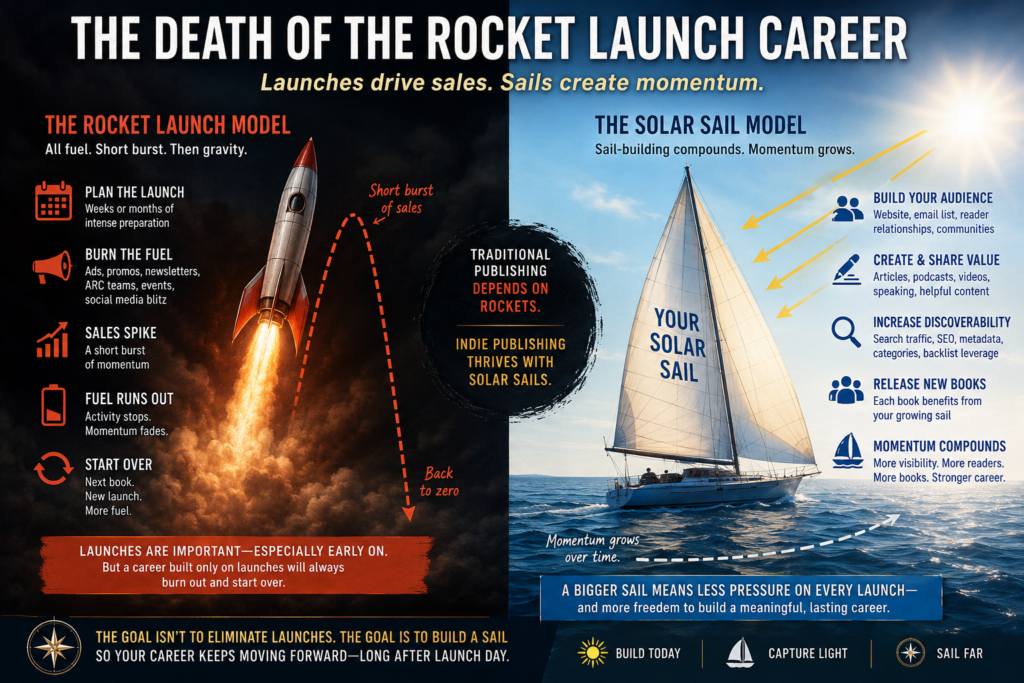
Daily sales are sinking. Organic reach has collapsed. AI-generated sludge is flooding storefronts while retailers tighten their grip on discoverability. Indie authors are being told to do more of everything — more books, more ads, more social media, more platforms — while the systems underneath us become increasingly unstable and hostile.

The Solar Sail Theory of Indie Publishing offers a different approach.

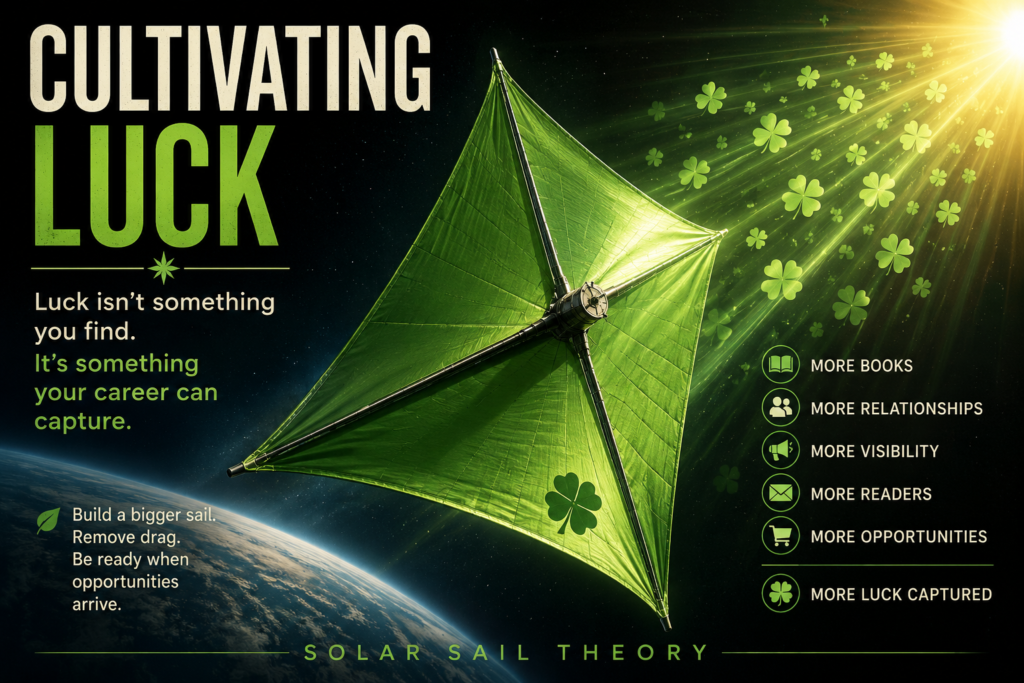
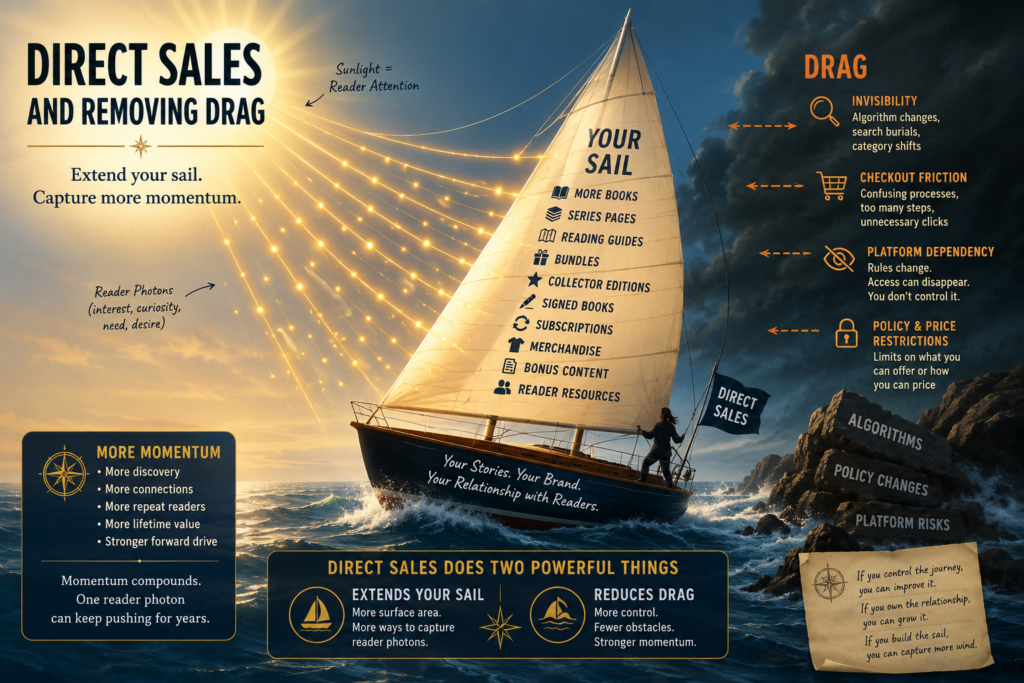
Instead of chasing endless “rocket launch” marketing spikes, authors can build long-term momentum by expanding their discoverable surface area across the internet and in real life, then channeling that attention into owned reader relationships through websites, email lists, and direct sales.

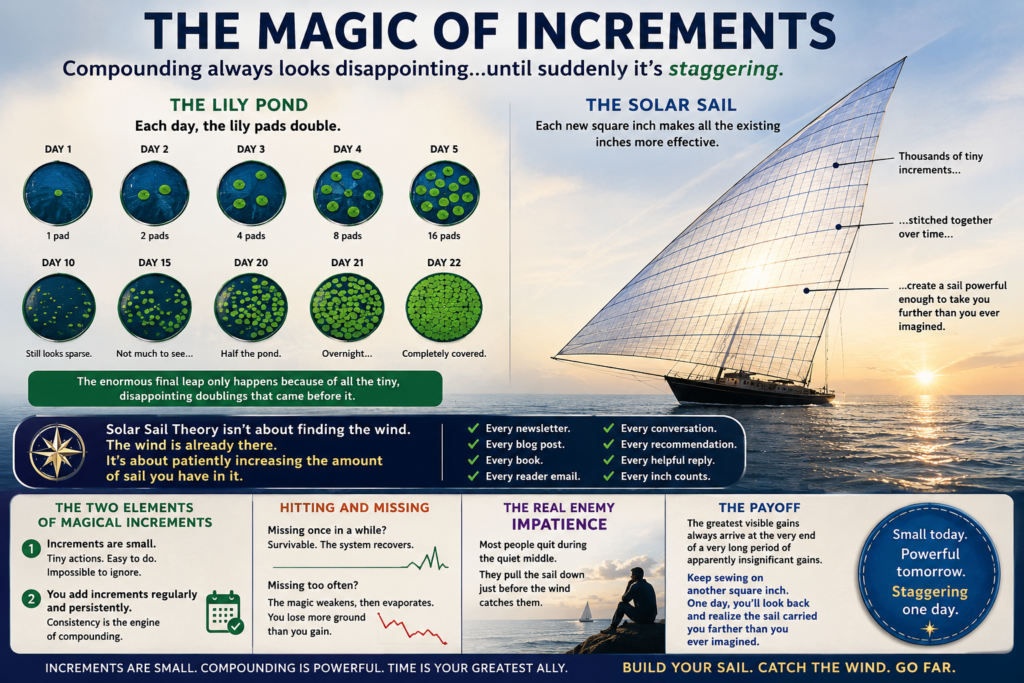
A solar sail doesn’t move through explosive force. It moves by capturing thousands of tiny forces over time.

So can an indie author career.

EVEN MORE TIME KISSED MOMENTS Is Here!

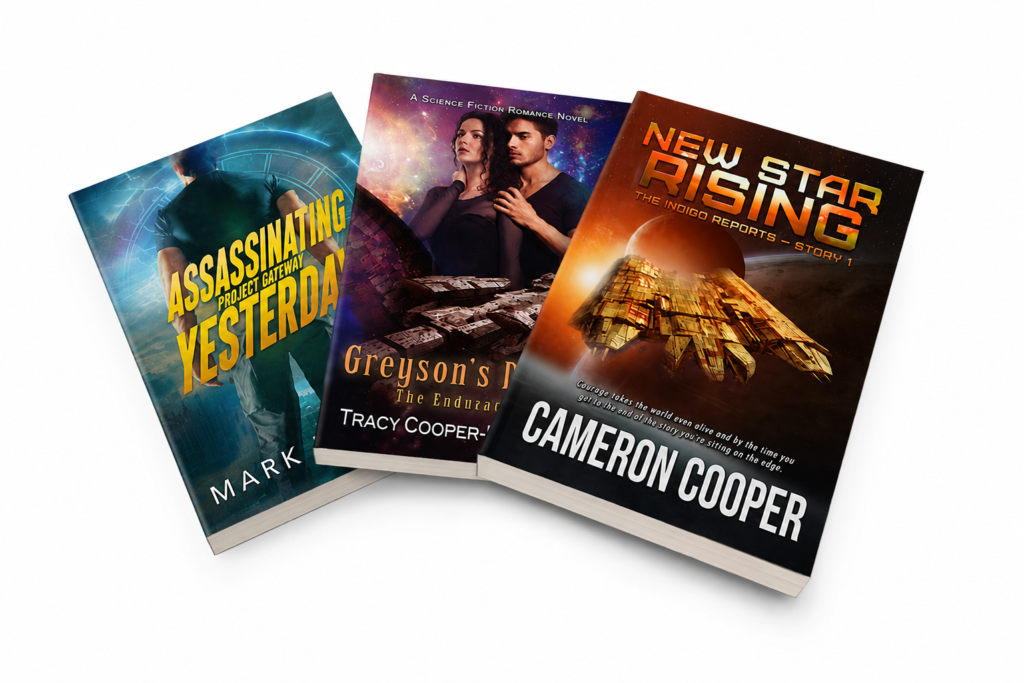
What happens when a ten-year anniversary edition becomes something more? While revisiting the Kiss Across Time series for a special collector release, Tracy Cooper-Posey found herself reflecting not just on the books, but on time itself, storytelling, survival, and the strange roads that lead writers to create the stories readers love. Kiss Across Memories is part memoir, part publishing notebook, and part behind-the-scenes look at one of Tracy’s longest-running series.

The Things We Don’t See

I had to stare at the photo for a while. At first, it didn’t make sense—farmland, maybe, or some kind of industrial grid. Then the scale began to sink in. The repetition. The roads. And then came the realization that stopped me: they’re tents. Hundreds of thousands of them, housing millions of people in a place I barely think about—proof that even now, in a supposedly connected world, vast and important things can exist just outside our awareness.

When Your Writing System Breaks: How to Rebuild It Better (Without Losing Your Mind)

Your writing system probably won’t fail all at once—it’ll decay, one small glitch at a time, until the tool you rely on starts slowing you down instead of supporting you. When that happens, the real solution isn’t finding a replacement that works the same way—it’s rethinking how your system works entirely. Here’s what OneNote’s decline taught me about rebuilding a writing workflow that’s faster, more flexible, and far more resilient.

Shopping Basket
Scroll to Top