Productive Indie Fiction Writer

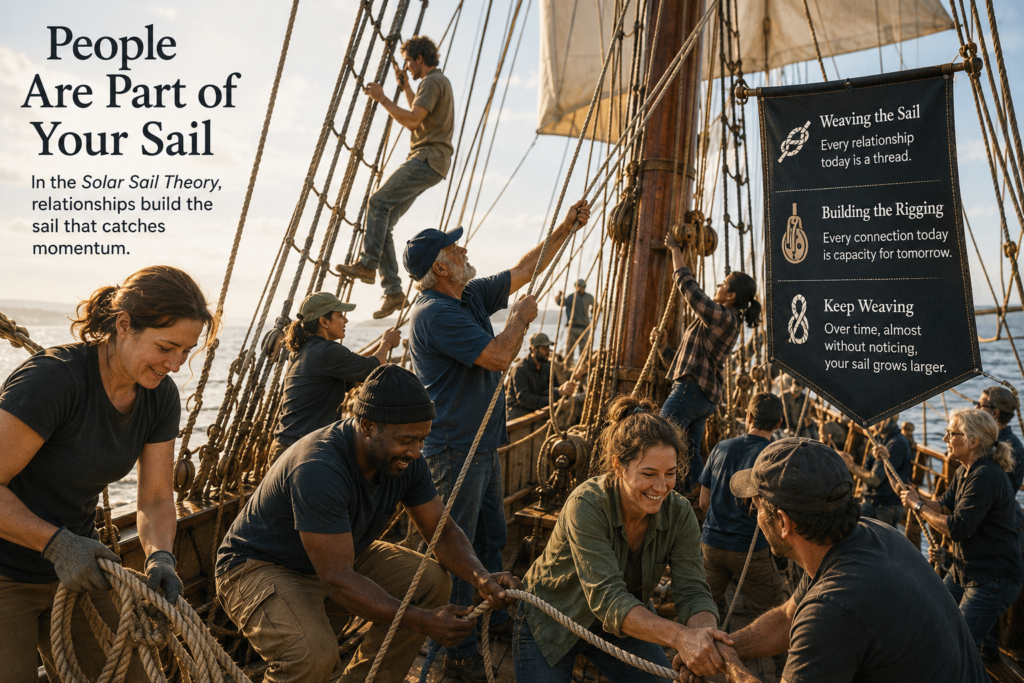
People Are Part of Your Sail

Writing careers aren’t built by books alone. Every conversation, reader, bookseller, podcast host, journalist, and fellow author becomes another thread in the sail that carries your career forward. Discover why people are one of the most powerful—and often overlooked—sources of long-term momentum in the Solar Sail Theory.
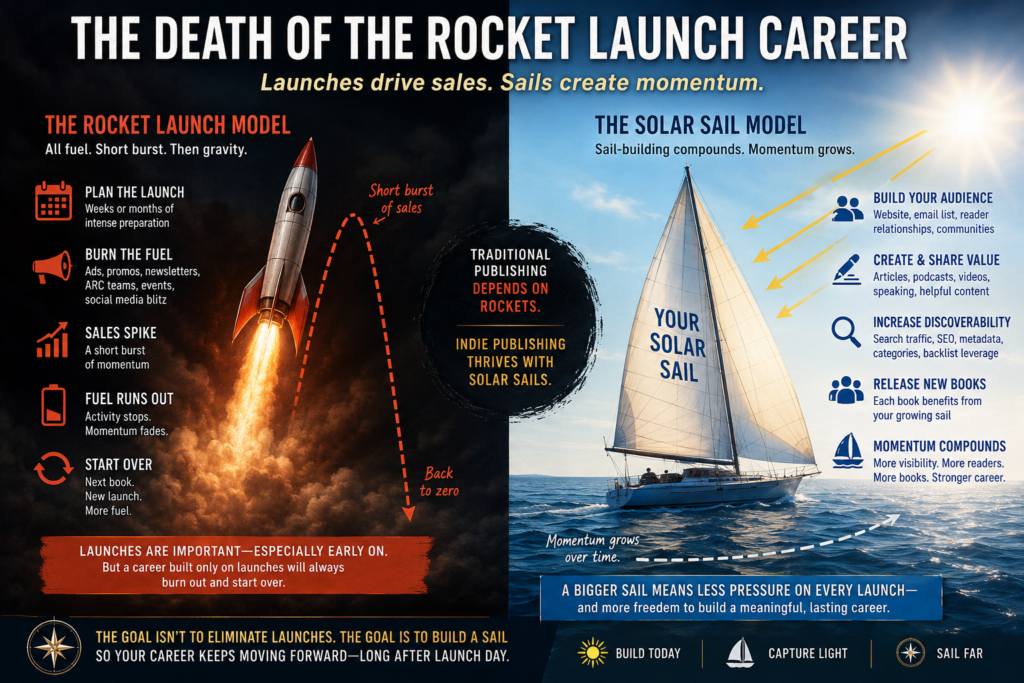
The Death of the Rocket Launch Career

Book launches aren’t dead. But the idea that every new release must carry your entire publishing business is fading fast. Traditional publishing still depends on launch velocity, but indie authors operate under different physics. Solar Sail Theory shifts the focus from short-term sales bursts to building long-term visibility, discoverability, and audience reach. The bigger your sail, the less any single launch can make—or break—your career.

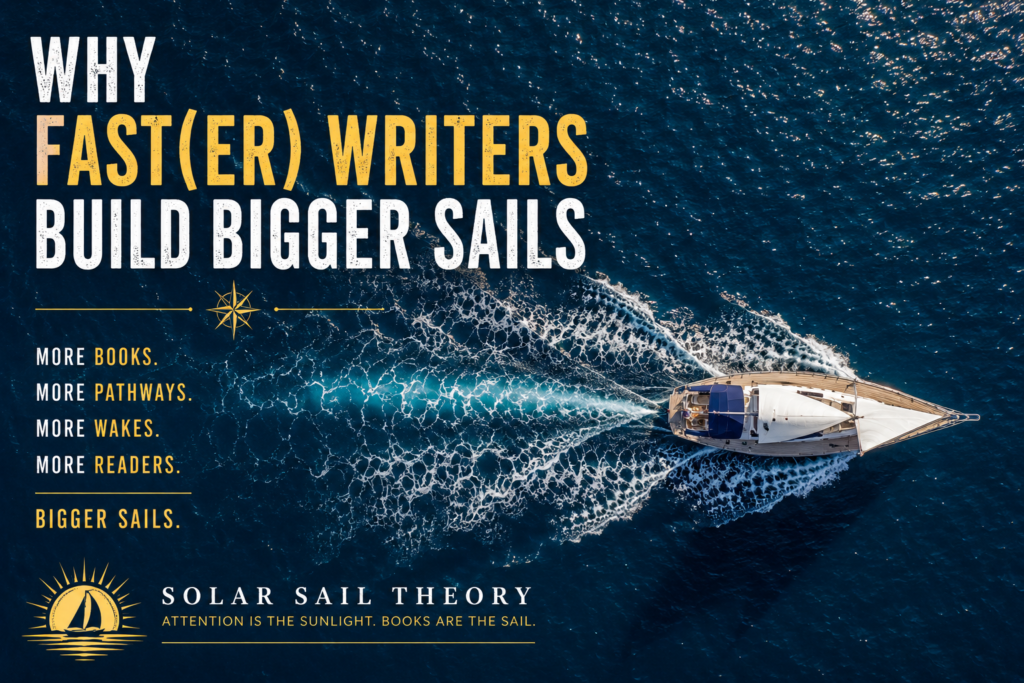
Why Fast(er) Writers Build Bigger Sails

One of the oldest arguments in publishing is whether writers should write quickly. Solar Sail Theory approaches the question from a different direction. Every book you publish becomes a discoverability asset: another doorway for readers, another wake spreading across the internet, and another opportunity for luck to find you. Fast(er) writers don’t just produce more books—they build bigger sails.

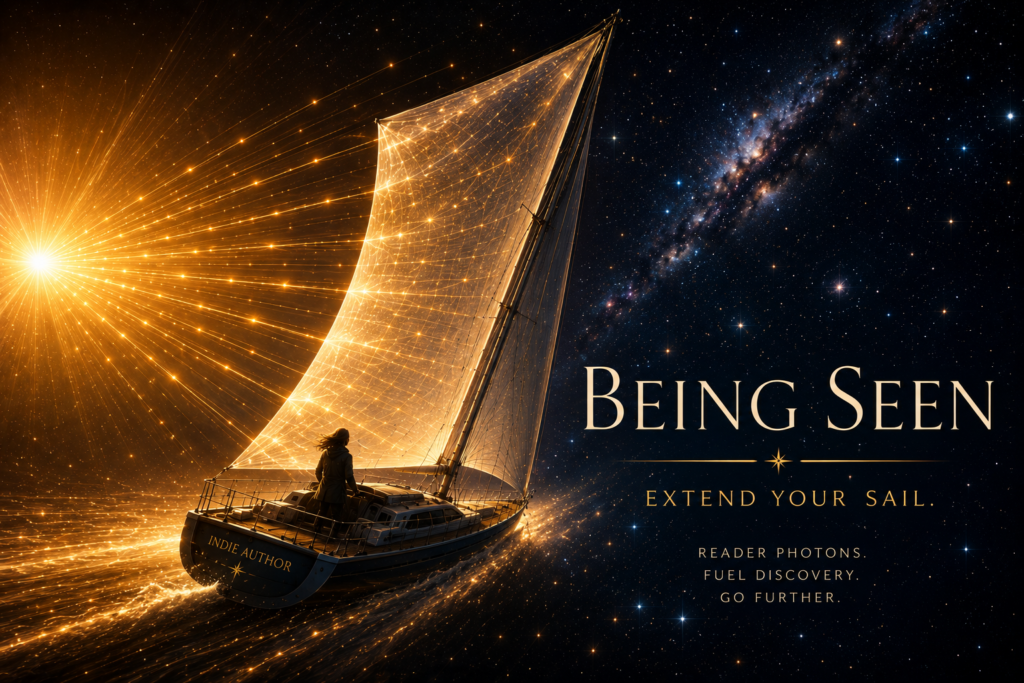
Being Seen: Why Visibility Matters More Than Virality

Most indie authors think “marketing” means chasing algorithms, posting endlessly on social media, and trying to become an influencer. No wonder so many writers recoil from it. But the “Being Seen” part of Solar Sail Theory is much simpler — and far more sustainable. You are not trying to become famous. You are trying to become findable. Visibility that compounds over time, through podcasts, guest posts, searchable discussions, live events, and relationships, creates a sail that keeps catching reader photons long after the original effort ends.

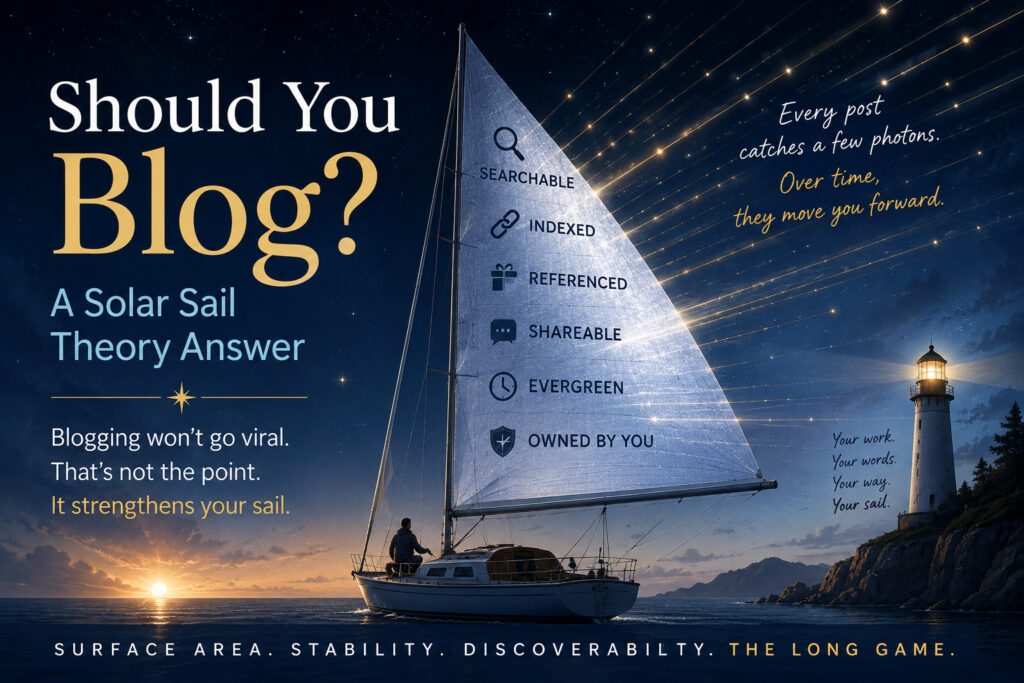
Should You Blog? A Solar Sail Theory Answer

Every few years, someone declares that blogging is dead. Usually loudly. Usually confidently. Usually while selling a course about the thing you’re supposedly meant to do instead.

But Solar Sail Theory asks a different question entirely: not whether blogging is fashionable, but whether it strengthens your discoverability surface area. In an era of disappearing social posts, algorithmic chaos, and AI-mediated search, blogging may be less about going viral—and more about building durable infrastructure that compounds over time.

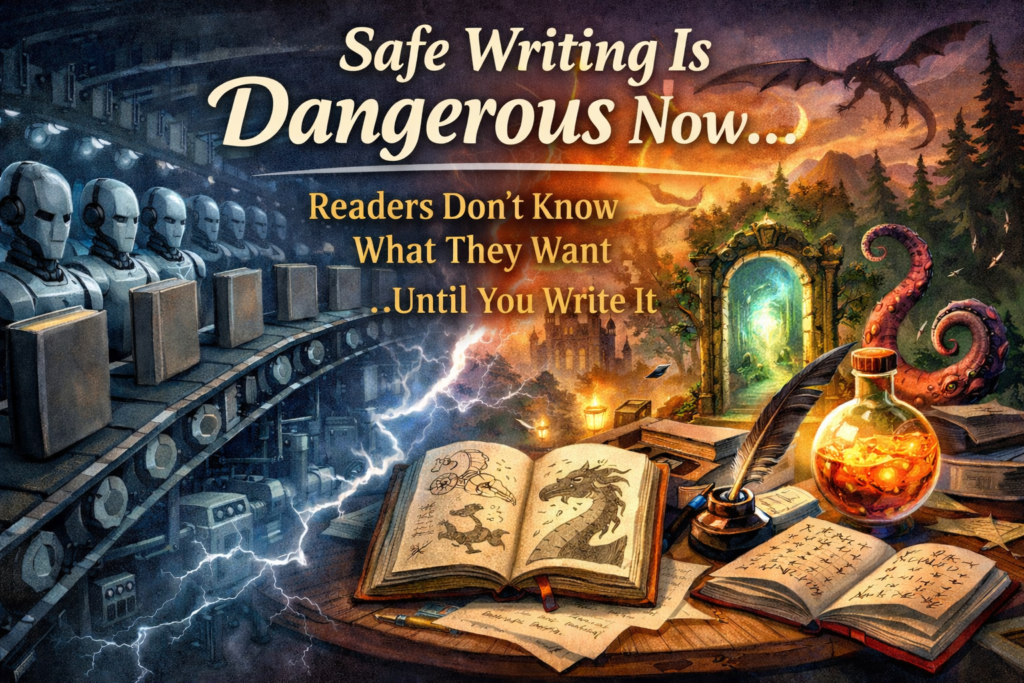
Safe Writing Is Dangerous Now. Here’s What to Write Instead.

Readers do not know what they want until they see it. They cannot ask for the strange combination, the odd obsession, or the idea that should not work but somehow does. That is your advantage. The books that stand out now will not be the safest ones. They will be the ones only you could have written.

Trad vs Indie in 2026

Traditional publishing and indie publishing aren’t just two different business models — they’re two different belief systems. Trad authors think they’re building a career as an artist. Indie authors know they’re running a business. In 2026, that mindset divide matters more than ever. With AI flooding the marketplace, platforms deep in enshittification, bookstores shrinking, and rights tied up tighter than a banker’s fist, the only way to make good choices is to understand exactly how each system really works — not how you wish it worked. This is the brutal, unsentimental guide to both paths.

AI Just Went Mainstream. Here’s What That Means for Indie Authors

AI has officially gone mainstream—and that matters more than you think. This week on the blog, we’re looking at what the AI tipping point means for indie authors (hint: it’s not time to panic, but it is time to get your author platform AI-friendly). If your site doesn’t tell a chatbot what kind of stories you write, you’re already losing visibility.

Let’s fix that.

Your Personal Weasel Word List (and Why You Should Actually Use It)

Before you dump your draft on an editor—or on your future self—you should be doing a ruthless cleanup pass. That starts with your own personal Weasel Word List: those sneaky, repetitive words and phrases that dull your prose and clutter your scenes. You’ve got ‘em. Everyone does. The trick is to catch them before your editor does. Bonus: clean manuscripts make ebook compilers very, very happy (and don’t randomly explode on Kindle).

Shopping Basket
Scroll to Top