The Boring Magic of Showing Up Tomorrow
The voice that breaks your writing streak doesn’t show up on a bad day.
It shows up after a good one—and tells you to take tomorrow off.
The voice that breaks your writing streak doesn’t show up on a bad day.
It shows up after a good one—and tells you to take tomorrow off.
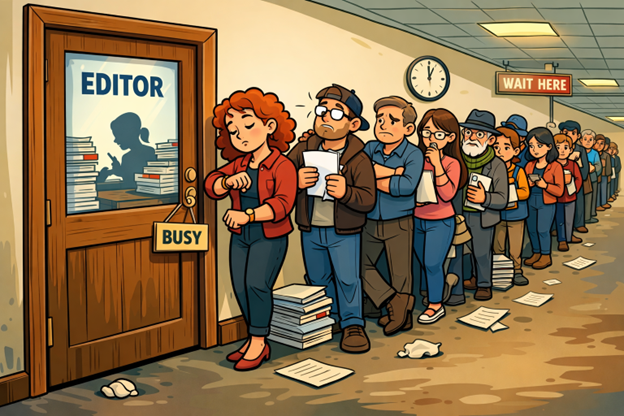
If you’re waiting until your manuscript is finished before thinking about editing, you’re already behind. Editors don’t work on demand—they book weeks or months in advance to give every project the attention it deserves. The writers who stay on track? They treat editing as part of their production pipeline, not the final step.
Goals feel productive. Habits are productive. If you want to be a producing indie author, you don’t need a shinier goal — you need a quieter, more consistent life. The writers who finish books aren’t chasing outcomes; they’re protecting routines. It may look boring from the outside. Good. That “nothing to report” life? That’s exactly what makes the words pile up.
Right now the to-do list is loud. Fulfill a 660%-funded Kickstarter. Edit other writers’ books. Run a publishing company. Market existing titles. Keep upcoming releases on track. And somewhere in there is a quiet little line that says: Write the next book.
That line is always the easiest to slide.
Because it doesn’t yell. It doesn’t send invoices. It doesn’t have shipping deadlines. It just waits — patiently — while everything else feels urgent.
Writing resolutions fail for remarkably predictable reasons.
Not because writers are lazy or unserious—but because they aim too high, too vaguely, and too emotionally.
The writers who finish books aren’t the ones who promise themselves a perfect year.
They’re the ones who build systems that survive imperfect weeks.
Fourteen years ago, I shared a snapshot of my writing desk—and a surprising number of you still remember it! That desk is still with me, but the world around it has changed: the landline is gone, the monitors have multiplied, and only Strider remains of the original furry trio. This year, I revisited that 2011 post with a photo tour of my current workspace, the oddball trinkets that inspire me, and a glimpse into how I really write now—recliner and all. Spoiler: dusty fantasy author chaos is alive and well.
After my fourth serious trial, I’m calling it: for me, dictation is dead—at least for now. The modest bump in words per hour just doesn’t outweigh the tech friction, location lock-in, and editing overhead. If dictation plus clean-up time gets you more net words than typing, go for it. But if you’re already a clean, fast typist, the numbers might tell you to stick with your keyboard.
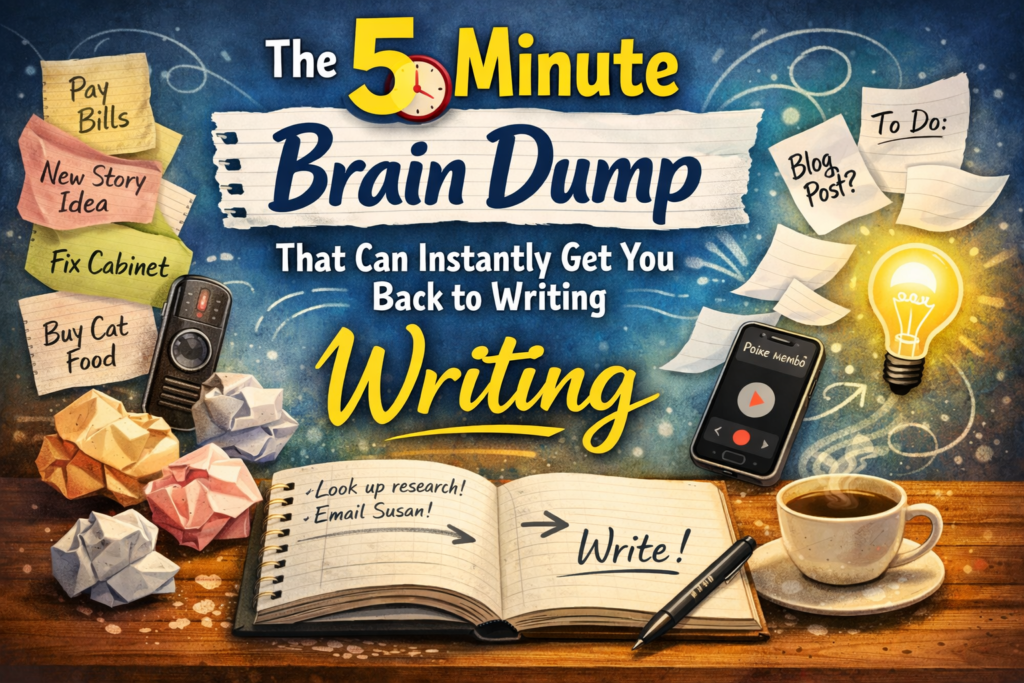
Creative inertia is real. Whether you’ve stepped away from your novel for five minutes or five months, restarting always feels harder than continuing. It’s not a personal failing—it’s physics. Here’s how to beat the resistance and get back into flow, one “Just Start” at a time.
Most writers think they’re breaking down their tasks—but if you’re still staring at “Revise novel” on your to-do list and feeling stuck, you’ve got a project, not a task. Here’s how to break your work down into do-able chunks that actually get done.
What if, instead of waiting for those rare marathon writing sessions, you fit your writing into the cracks of your day—one or two hours at a time? Puzzle-Piece Scheduling is about breaking your writing into smaller chunks that still add up to real progress. It’s not about being perfect—it’s about being consistent. Even short sprints can keep your story warm and moving forward.