

From the SRP Editor site:
Every writer knows the feeling. You finish a chapter, lean back in your chair, and think, There. That’s it. That’s the chapter.
Then you read it the next morning.
Suddenly, the dialogue isn’t quite right. The pacing drags in the middle. A character says something they would never actually say. The emotional moment that felt powerful the night before now feels flat. So you start again.
Readers never see that version.
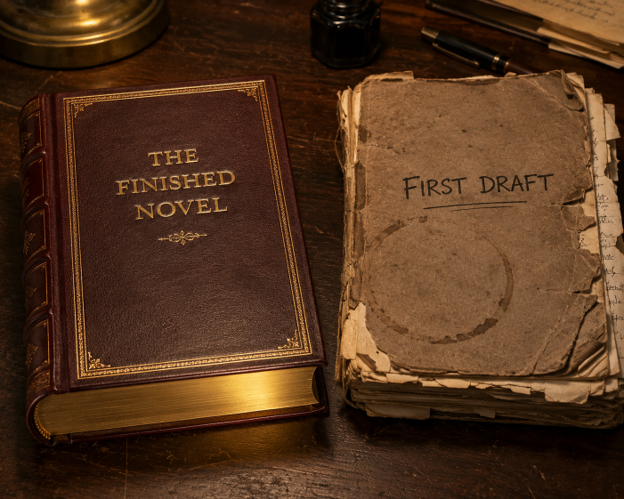
They don’t see the chapter that was rewritten three times. They don’t see the scene that was cut because it slowed the story down. They don’t see the character who vanished halfway through the manuscript because they weren’t serving the story. They don’t see the paragraph that took twenty minutes to write and thirty seconds to delete. All they see is the finished book.
That’s as it should be. The job of a writer isn’t to show readers how much work went into a story. The job is to make the story feel effortless. When a reader says, “I couldn’t put it down,” they’re not complimenting the first draft. They’re complimenting every draft that came after it.
This is one of the reasons I worry when I hear promises about writing becoming instant, effortless, or automatic. The hard part of writing isn’t getting words onto a page. Writers have always been able to do that. The hard part is discovering which words belong there.
That’s what revision is for.
A first draft is often an act of exploration. You’re figuring out what the story is about. Revision is where you begin to understand what the story was trying to tell you all along.
I’ve worked with enough authors over the years to know that nearly every manuscript has hidden layers beneath the finished version. There are abandoned plot lines, deleted chapters, rewritten endings, and countless small decisions that shaped the final book. Readers never see those drafts. But the drafts matter.
In many ways, the quality of a book is determined less by how well it was written and more by how well it was rewritten.
The next time you’re tempted to compare your rough draft to someone else’s published novel, remember this: You’re seeing every flaw, every uncertainty, and every awkward sentence in your own manuscript. You’re seeing only the polished result of theirs.
And that’s never a fair comparison.
— Mark