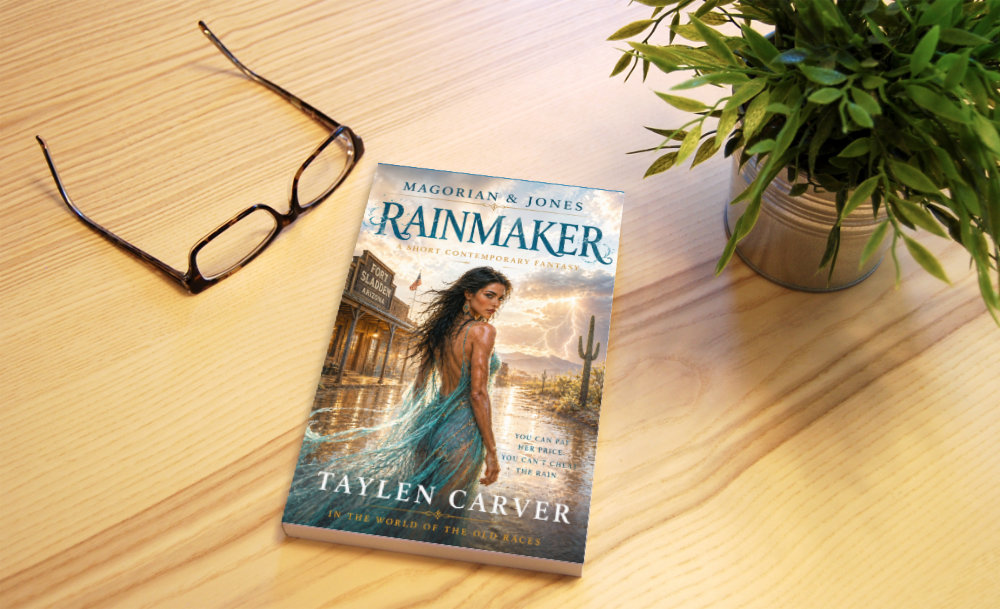
Author name: Taylen Carver

Taylen Carver is an Aurealis Award finalist, and is the pen name used by bestselling author Tracy Cooper-Posey. As Taylen Carver, she writes contemporary, epic and urban fantasy stories and novels. As Tracy Cooper-Posey, she writes romantic suspense, historical suspense, fantasy and science fiction romance, plus women’s fiction. She also writes science fiction, including best-selling space opera, under the pen name of Cameron Cooper. She has published over 200 titles under all pen names since 1999, been nominated for five CAPAs including Favourite Author, and won the Emma Darcy Award. She turned to indie publishing in 2011. Her indie titles have been nominated four times for Book of The Year. Tracy won the award in 2012, a SFR Galaxy Award in 2016 and came fourth in Hugh Howey’s SPSFC#2 in 2023. She has been a national magazine editor, is currently a city magazine editor, and for a decade she taught romance writing at MacEwan University. She is addicted to Irish Breakfast tea and chocolate, sometimes taken together. In her spare time she enjoys history, Sherlock Holmes, science fiction and fantasy and ignoring her treadmill. An Australian Canadian, she lives in Edmonton, Canada with her husband, a former professional wrestler, where she moved in 1996 after meeting him on-line.

Why Fantasy Keeps Hiding Magic in Libraries

There was a time when fantasy looked outward, toward lost kingdoms and blank spaces on the map. Today, with the world thoroughly mapped and disappointingly short on hidden plateaus full of dinosaurs, fantasy has shifted its secrets elsewhere. Now the lost world waits behind a locked door in the back of a library, or on a shelf in a bookshop that was not there yesterday.

Why Fantasy Worlds Feel Smaller Than Middle-earth

Fantasy maps have the same problem as those diagrams of the Earth and the Moon: they make impossible distances look deceptively small. A quarter-inch on the map between Rivendell and Hollin hardly seems worth mentioning—until you realise the Fellowship spent weeks walking it. Why does Middle-earth feel so much larger than other fantasy worlds, even worlds that are technically bigger? The answer may lie not in the map itself, but in the long, cold, weary miles between the names.

Why Bridges Are Always Trouble in Fantasy

Bridges look simple, but they quietly reshape the world around them. From Tolkien’s Last Bridge to the rainbow span of Bifröst, bridges in fantasy turn geography into decisions, create natural chokepoints, and mark the crossing from one world into another. As history shows—from Roman Corbridge to the Rhine in 1945—who controls the bridge often controls the story. Which may be why so many unforgettable fantasy moments happen right in the middle of one.

The Fantasy Divide I Didn’t Have Words For—Until Now

For years, I assumed my growing frustration with certain fantasy novels was a personal failing—shorter attention span, impatience, age. It turns out it wasn’t me at all. Fantasy has quietly split into two different kinds of books doing two very different things: story-first fiction and immersion-first fiction. Neither is wrong—but when you don’t know which one you’re reading, disappointment is almost guaranteed. This post is about naming that divide, understanding where it came from, and giving readers permission to stop blaming themselves when a “perfectly good” book just doesn’t work for them.

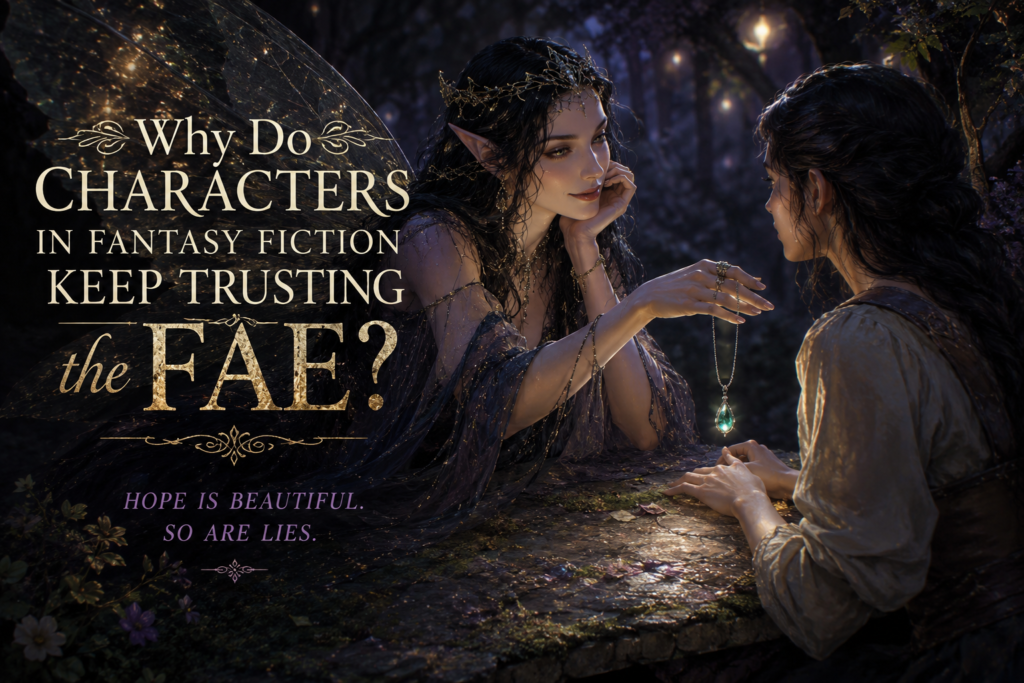
Don’t Mess With Fairies

Fairies aren’t small, sweet, or safe. In modern fantasy, the Fae are terrifying, full-sized, and operating on their own brutal logic. From Charlaine Harris to Holly Black, this post explores the sharp-toothed truth behind the folklore—and why I prefer my fairies dangerous.

The Price of Power: Why Magic Should Hurt

Power without a price feels like cheating—and in fantasy, magic that costs nothing tends to mean nothing. Whether it’s burning memories, painful transformations, or the slow hollowing of a hero, the best magic systems leave a mark. Let’s talk about why magic should hurt—and what that says about the stories we can’t stop reading.

Why I’m (Still) Watching The Rings of Power — And Why Season 3 Might Be the Best Yet

The Rings of Power has always been a show that rewards patience — and, frankly, rewatching. The source material Amazon is allowed to adapt is more historical chronicle than narrative, yet the series has managed to turn Tolkien’s footnotes and timelines into emotionally grounded drama that gets better each time you revisit it. With a freshly overhauled writers’ room and Season 3 diving into the forging of the One Ring, now feels like the moment the show might step fully into its potential.

Shopping Basket
Scroll to Top