author mindset

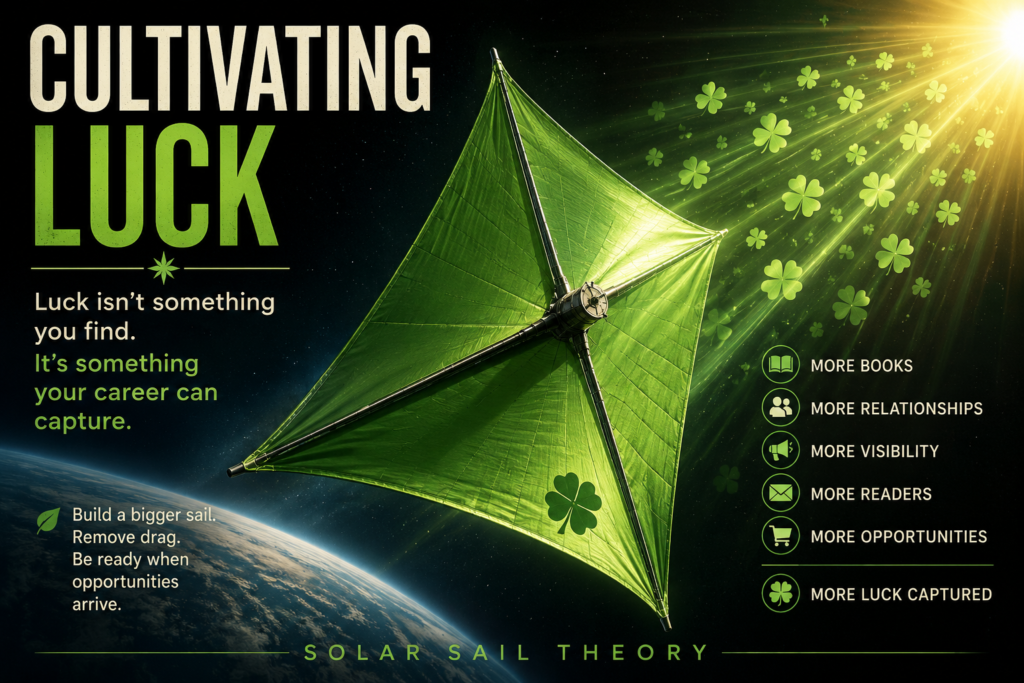
Cultivating Luck

Luck isn’t magic, and it isn’t reserved for a chosen few. In publishing, what looks like luck is often the result of years spent building momentum. Every book, every reader, every relationship and every opportunity adds another tiny push. Solar Sail Theory explains why some authors seem luckier than others—and why you can increase your chances of capturing luck without relying on a mythical “big break.”

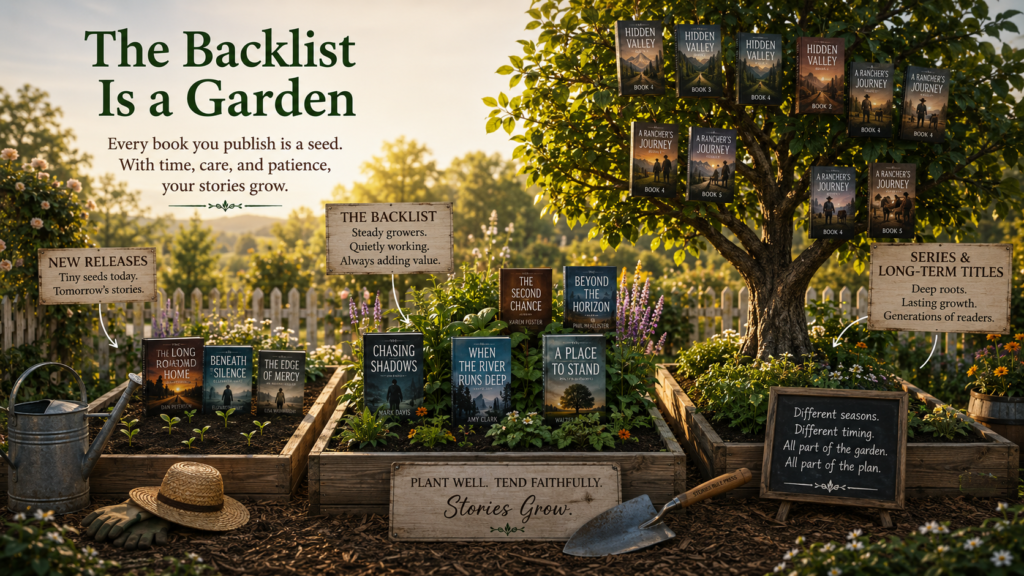
The Backlist Is a Garden

We spend a lot of time talking about launches in publishing. Launch week. Launch numbers. Launch strategies. But publishers eventually learn something authors often overlook: books aren’t just products. They’re plants. Some flourish immediately. Others take years to reach their full potential. The real strength of a publishing business isn’t found in a single launch—it’s found in a backlist that keeps growing, season after season.

Publishing Has Entered Its Horse Era

The indie gold rush is over. Publishing today feels less like striking it rich and more like pulling a plow through hard ground. Algorithms shift, discoverability shrinks, AI sludge floods storefronts, and the easy momentum is gone. But maybe that’s not a bad thing. Because hard eras reveal what actually matters: endurance, adaptability, direct relationships with readers, and authors willing to keep moving even when the road gets muddy. Welcome to publishing’s horse era.

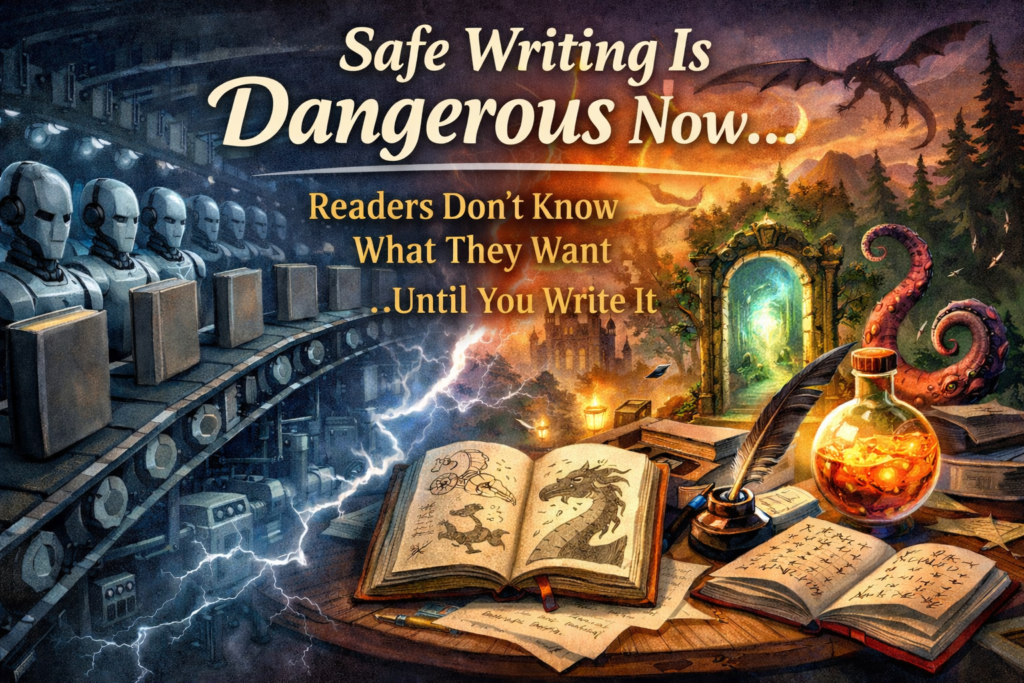
Safe Writing Is Dangerous Now. Here’s What to Write Instead.

Readers do not know what they want until they see it. They cannot ask for the strange combination, the odd obsession, or the idea that should not work but somehow does. That is your advantage. The books that stand out now will not be the safest ones. They will be the ones only you could have written.

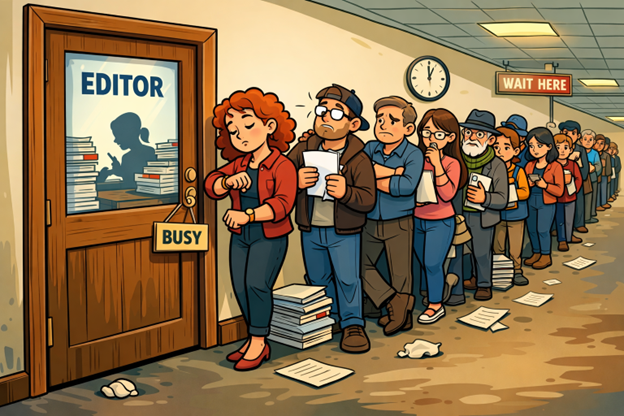
Your Editor Isn’t Waiting—And That’s a Good Thing

If you’re waiting until your manuscript is finished before thinking about editing, you’re already behind. Editors don’t work on demand—they book weeks or months in advance to give every project the attention it deserves. The writers who stay on track? They treat editing as part of their production pipeline, not the final step.

The Easy Way To… (Get Ripped Off)

Everyone’s teaching authors how to spot scammers with lists of red flags and warning signs. But none of that works if your mindset is wrong. Because if part of you still wants the “easy way,” you’ll explain away every clue. Here’s why modern scams work — and the one shift that makes you almost impossible to fool.

Writing While the House Is On Fire

Right now the to-do list is loud. Fulfill a 660%-funded Kickstarter. Edit other writers’ books. Run a publishing company. Market existing titles. Keep upcoming releases on track. And somewhere in there is a quiet little line that says: Write the next book.

That line is always the easiest to slide.

Because it doesn’t yell. It doesn’t send invoices. It doesn’t have shipping deadlines. It just waits — patiently — while everything else feels urgent.

Trad vs Indie in 2026, Part III

Most authors aren’t confused about how traditional and indie publishing work. They’re confused because they’re emotionally attached to what they want those systems to be. In 2026, choosing between trad, indie, or anything resembling “hybrid” isn’t about legitimacy or dreams of a writing career. It’s about understanding which system you’re willing to depend on — corporations behaving well, or yourself. This is the part nobody says out loud.

The Annual Ritual of the Writing Resolution

Writing resolutions fail for remarkably predictable reasons.
Not because writers are lazy or unserious—but because they aim too high, too vaguely, and too emotionally.

The writers who finish books aren’t the ones who promise themselves a perfect year.
They’re the ones who build systems that survive imperfect weeks.

Shopping Basket
Scroll to Top