

New Release: The Indie Author Survival Guide by Tracy Cooper-Posey
The Indie Author Survival Guide by Tracy Cooper-Posey is out now—a practical guide to building a profitable, productive, resilient writing career in a tougher publishing market.
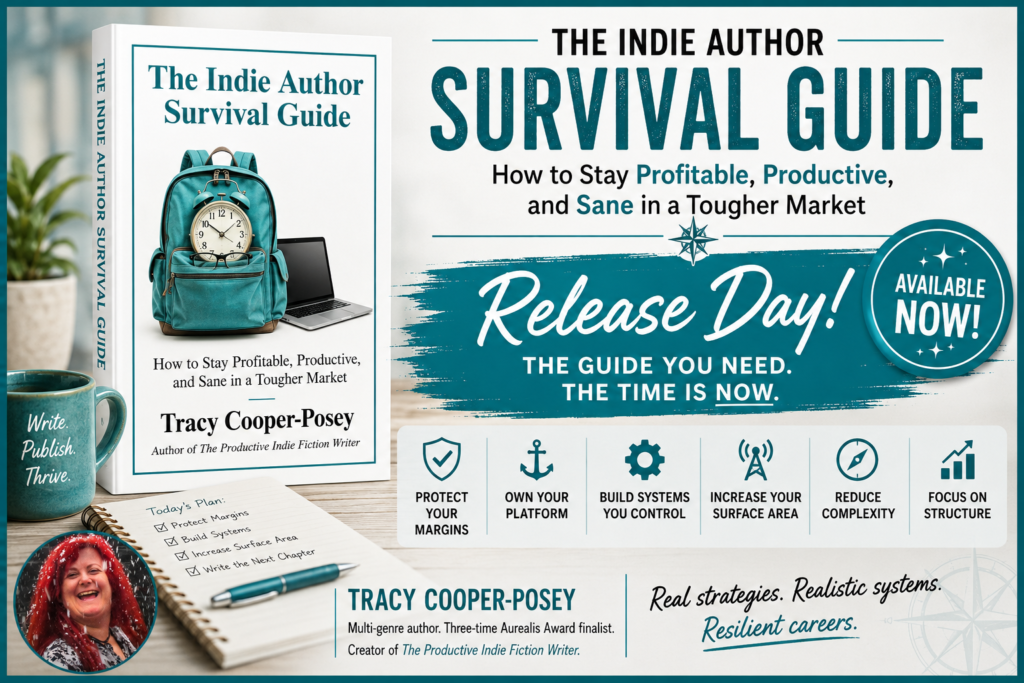
The Indie Author Survival Guide by Tracy Cooper-Posey is out now—a practical guide to building a profitable, productive, resilient writing career in a tougher publishing market.
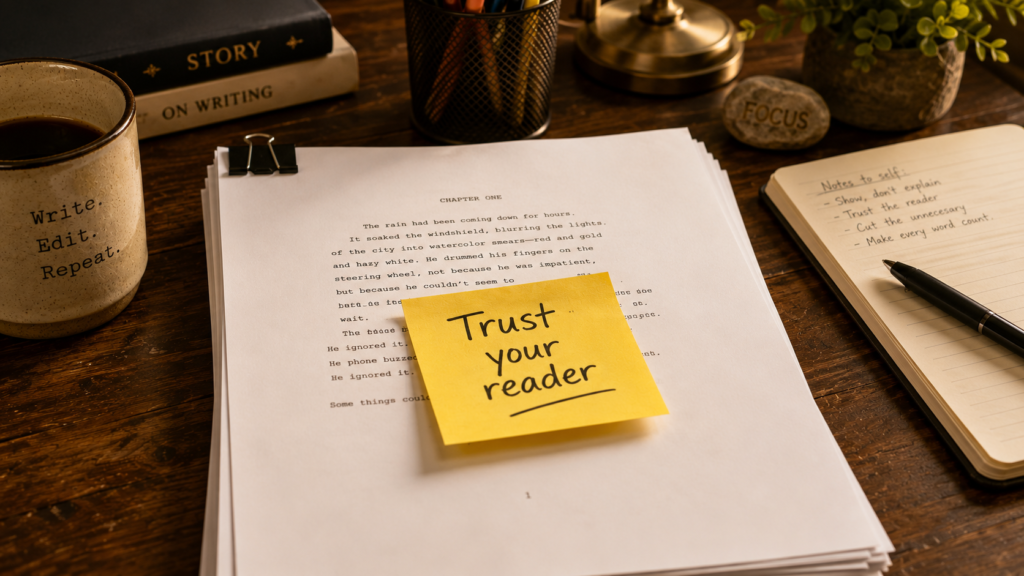
Readers are smarter than many writers give them credit for. When we explain every emotion, clue, or joke, we take away one of reading’s greatest pleasures: discovering the story for themselves. Sometimes the best editing advice is also the simplest—trust your reader.
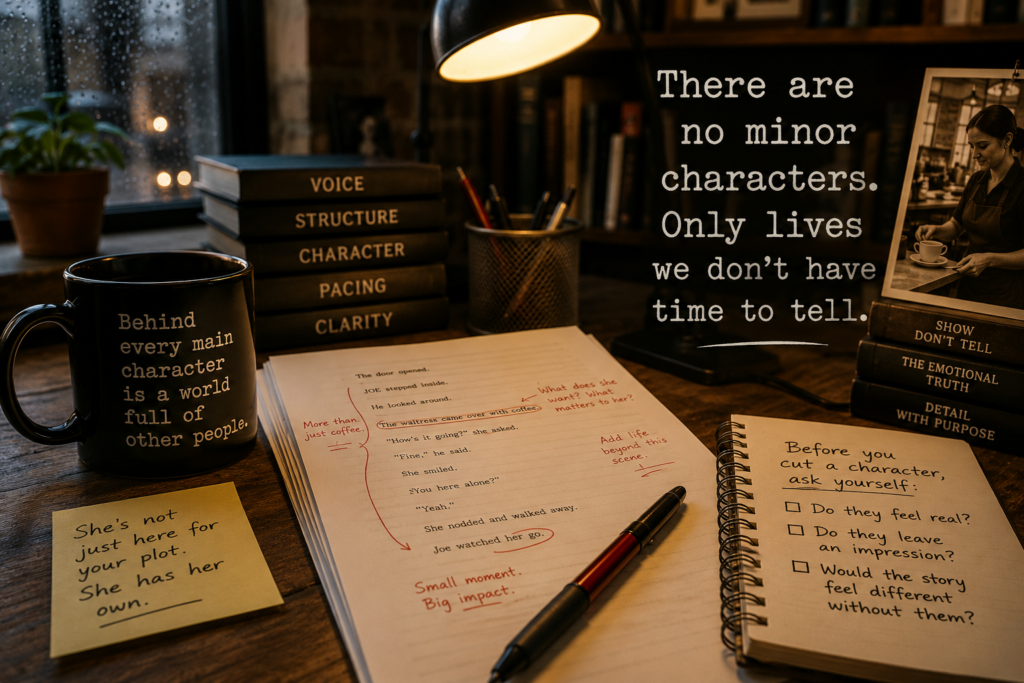
Some of the most memorable people in our lives were never the main characters. The same is true in fiction. If your supporting characters exist only to deliver information or move the plot along, your story misses an opportunity to create a richer, more believable world. Every character should feel like they have a life beyond the page.
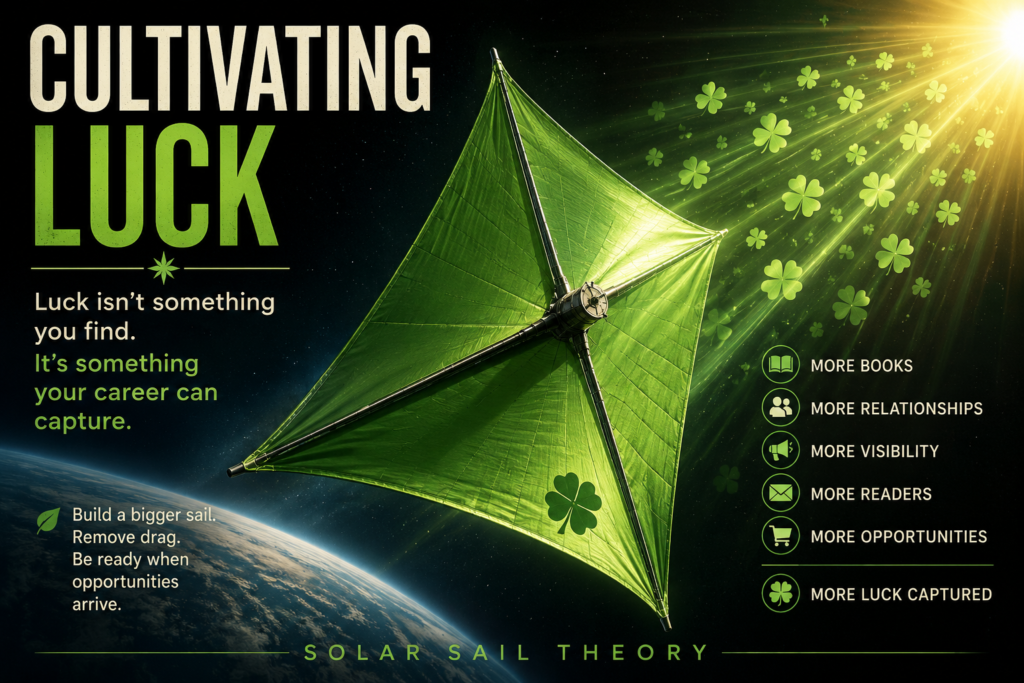
Luck isn’t magic, and it isn’t reserved for a chosen few. In publishing, what looks like luck is often the result of years spent building momentum. Every book, every reader, every relationship and every opportunity adds another tiny push. Solar Sail Theory explains why some authors seem luckier than others—and why you can increase your chances of capturing luck without relying on a mythical “big break.”
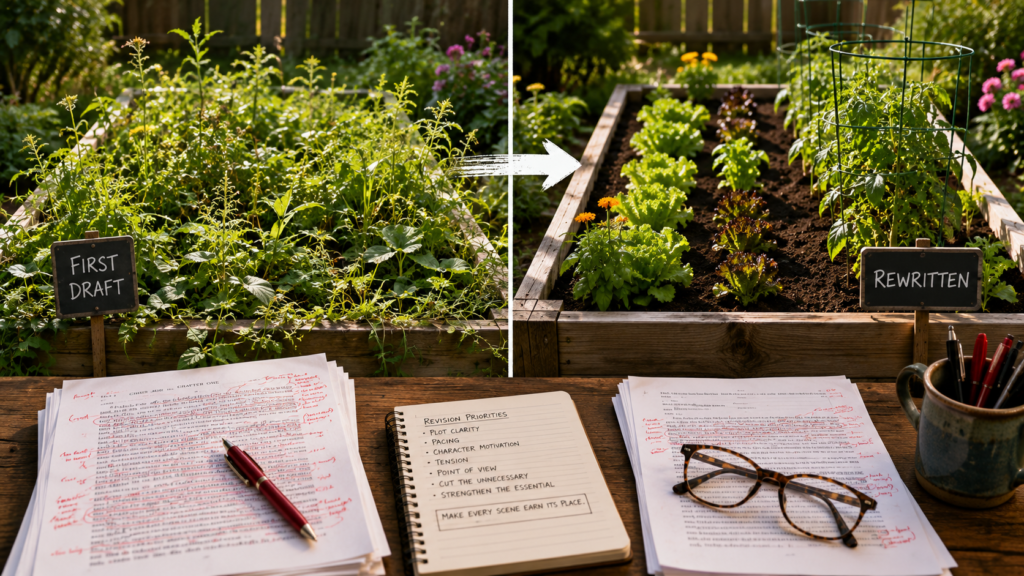
Most writers love writing but dread rewriting. Yet revision isn’t evidence the first draft failed—it’s where good stories become great ones. Like weeding a garden, editing isn’t about destroying what you’ve grown. It’s about giving the best parts room to flourish.
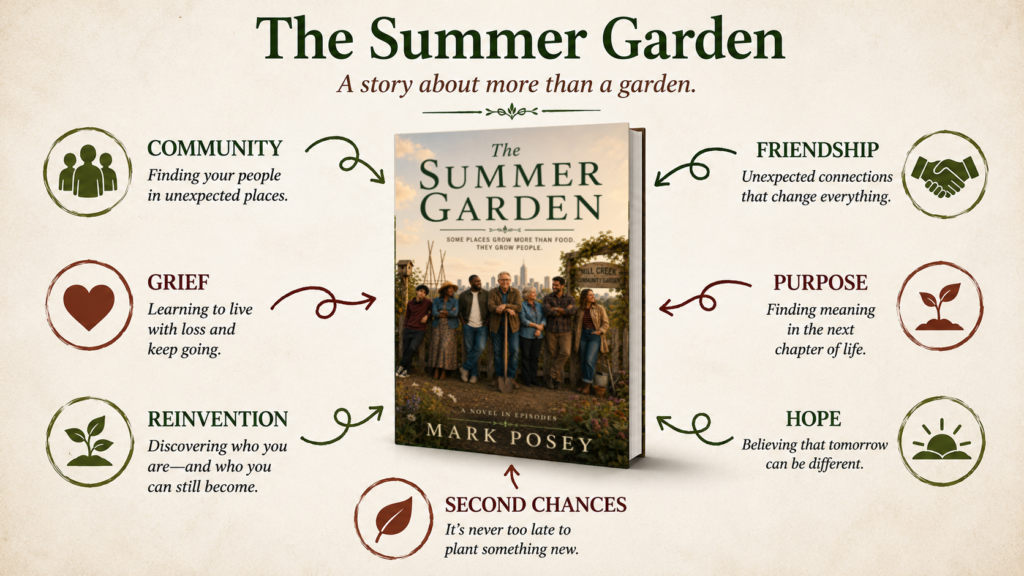
Every story has a plot. A detective solves a murder. A spaceship crew saves a colony. A retired man plants tomatoes. But the stories readers remember long after the last page are rarely about those events alone. Beneath the plot lies a deeper story—the emotional truth, the question being explored, the reason the story resonates. As an editor, one of the most important questions I can ask is: What is this story really about?
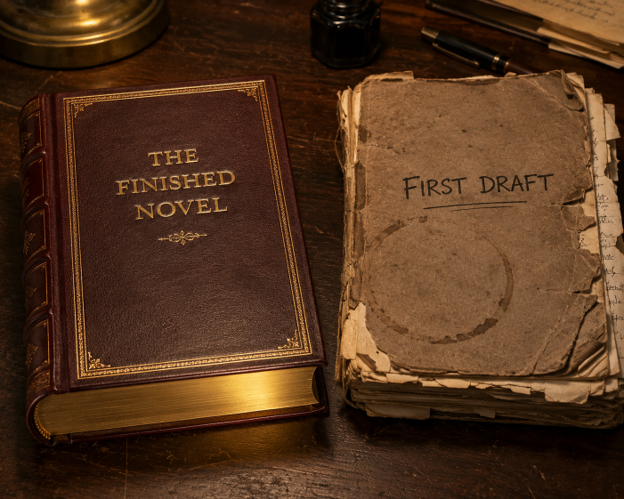
Every published novel has a hidden history. Behind every finished book are deleted scenes, rewritten chapters, abandoned plot lines, and countless small decisions that readers never see. The first draft may discover the story, but revision is where the story reveals what it was trying to become all along.
The indie gold rush is over. Publishing today feels less like striking it rich and more like pulling a plow through hard ground. Algorithms shift, discoverability shrinks, AI sludge floods storefronts, and the easy momentum is gone. But maybe that’s not a bad thing. Because hard eras reveal what actually matters: endurance, adaptability, direct relationships with readers, and authors willing to keep moving even when the road gets muddy. Welcome to publishing’s horse era.

Reading isn’t just “content consumption.” It’s time. Emotional investment. Trust. You’re handing several hours of your life over to another person and hoping they take you somewhere worthwhile. That’s why stories that feel genuinely human matter more now than ever.
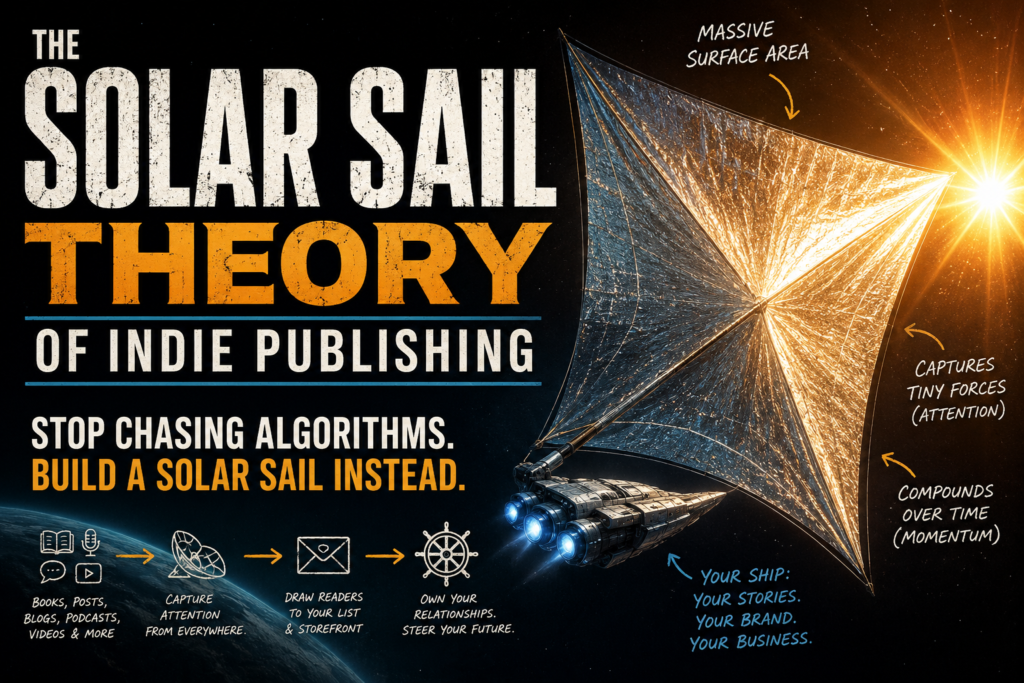
Daily sales are sinking. Organic reach has collapsed. AI-generated sludge is flooding storefronts while retailers tighten their grip on discoverability. Indie authors are being told to do more of everything — more books, more ads, more social media, more platforms — while the systems underneath us become increasingly unstable and hostile.
The Solar Sail Theory of Indie Publishing offers a different approach.
Instead of chasing endless “rocket launch” marketing spikes, authors can build long-term momentum by expanding their discoverable surface area across the internet and in real life, then channeling that attention into owned reader relationships through websites, email lists, and direct sales.
A solar sail doesn’t move through explosive force. It moves by capturing thousands of tiny forces over time.
So can an indie author career.