writing productivity

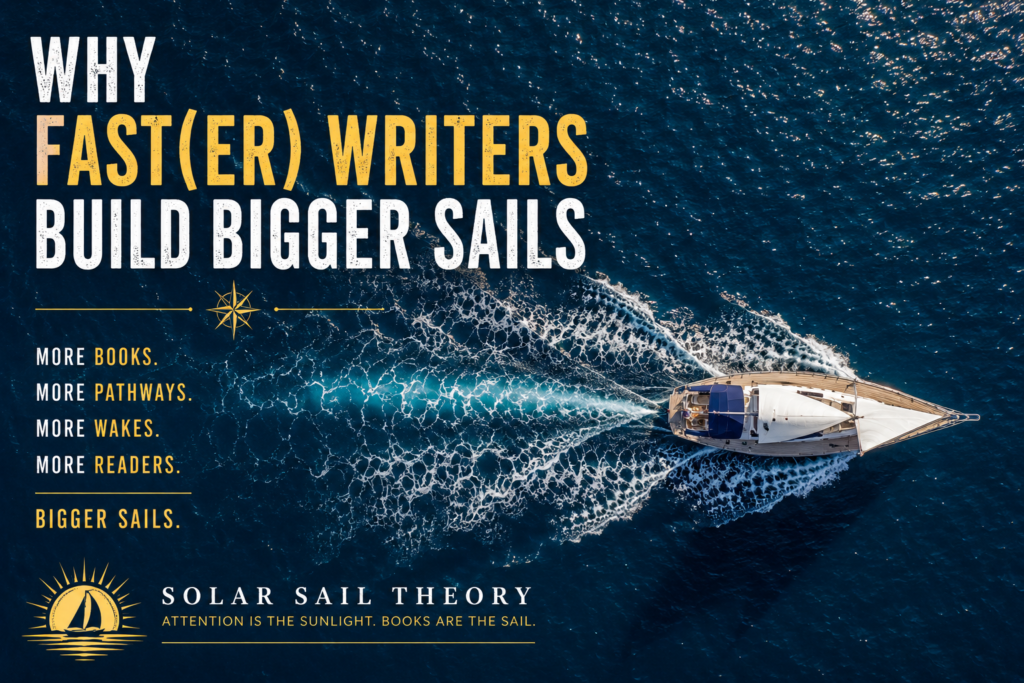
Why Fast(er) Writers Build Bigger Sails

One of the oldest arguments in publishing is whether writers should write quickly. Solar Sail Theory approaches the question from a different direction. Every book you publish becomes a discoverability asset: another doorway for readers, another wake spreading across the internet, and another opportunity for luck to find you. Fast(er) writers don’t just produce more books—they build bigger sails.
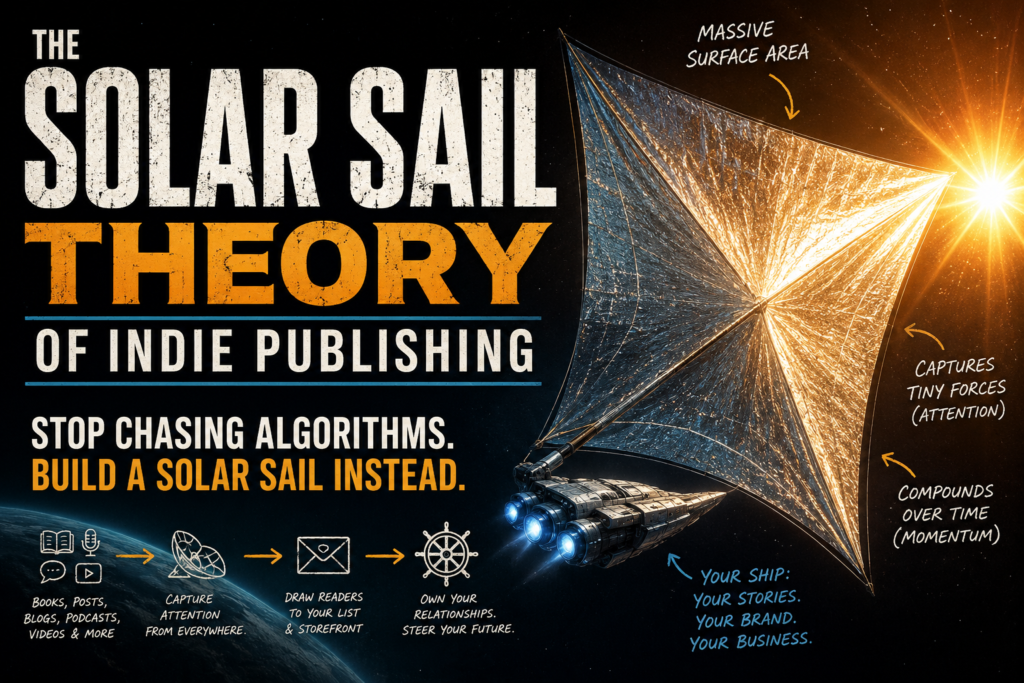
The Solar Sail Theory of Indie Publishing

Daily sales are sinking. Organic reach has collapsed. AI-generated sludge is flooding storefronts while retailers tighten their grip on discoverability. Indie authors are being told to do more of everything — more books, more ads, more social media, more platforms — while the systems underneath us become increasingly unstable and hostile.

The Solar Sail Theory of Indie Publishing offers a different approach.

Instead of chasing endless “rocket launch” marketing spikes, authors can build long-term momentum by expanding their discoverable surface area across the internet and in real life, then channeling that attention into owned reader relationships through websites, email lists, and direct sales.

A solar sail doesn’t move through explosive force. It moves by capturing thousands of tiny forces over time.

So can an indie author career.

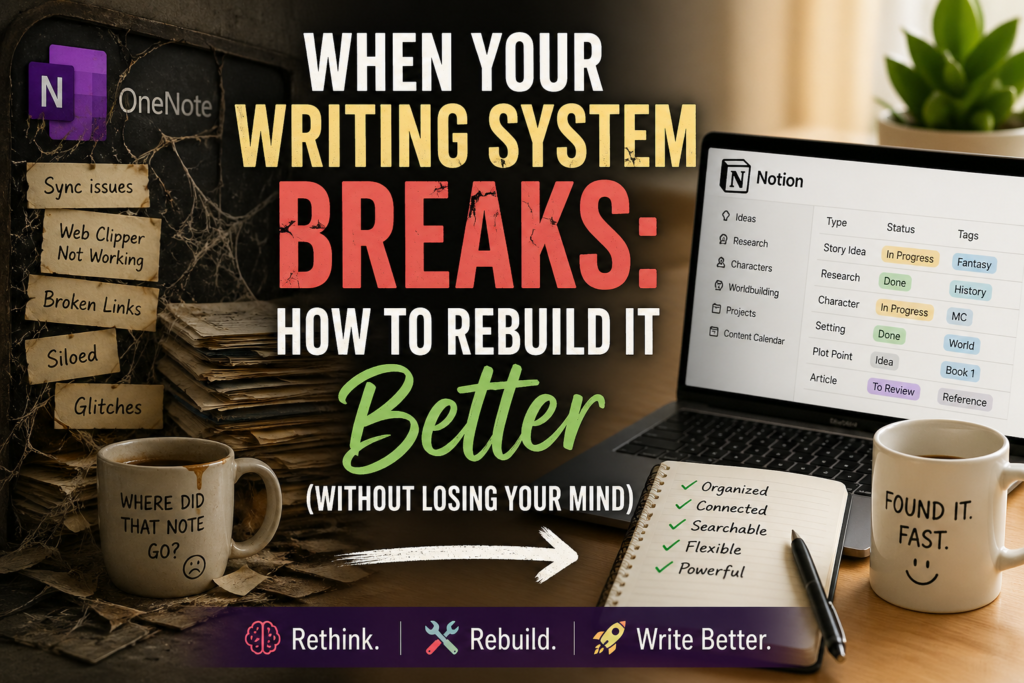
When Your Writing System Breaks: How to Rebuild It Better (Without Losing Your Mind)

Your writing system probably won’t fail all at once—it’ll decay, one small glitch at a time, until the tool you rely on starts slowing you down instead of supporting you. When that happens, the real solution isn’t finding a replacement that works the same way—it’s rethinking how your system works entirely. Here’s what OneNote’s decline taught me about rebuilding a writing workflow that’s faster, more flexible, and far more resilient.

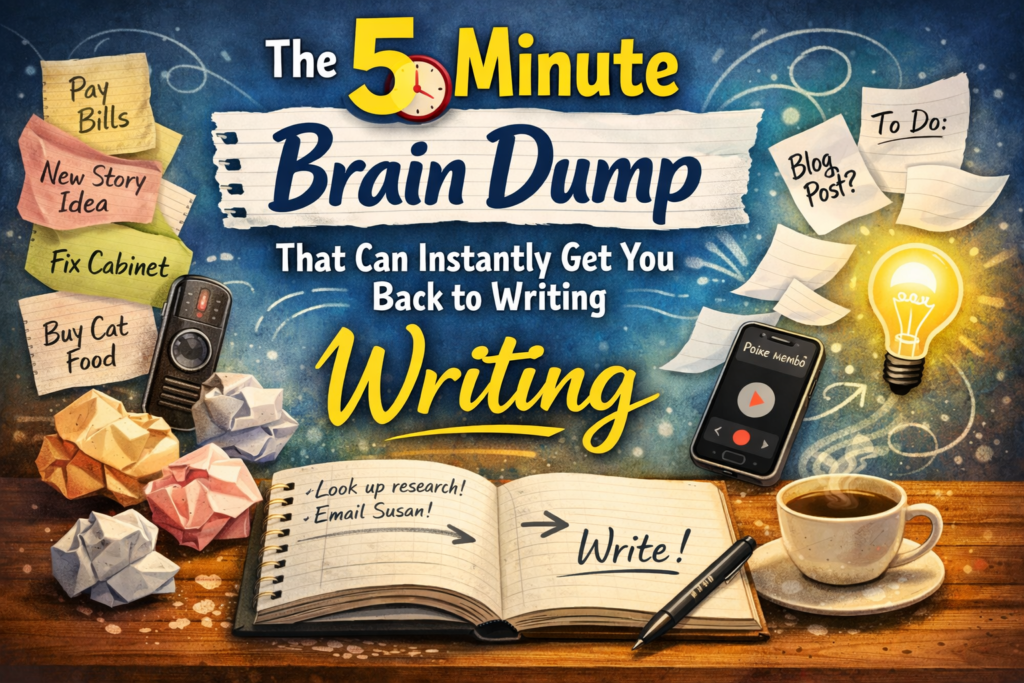
The 5-Minute Brain Dump That Can Instantly Get You Back to Writing

Excerpt: Writers don’t usually suffer from a lack of ideas—we suffer from too many. Between errands, reminders, story ideas, and random questions, our brains can become so cluttered that writing feels impossible. Here’s how a simple five-minute “brain dump” can clear the mental noise, help you focus, and get you back into the flow of writing.

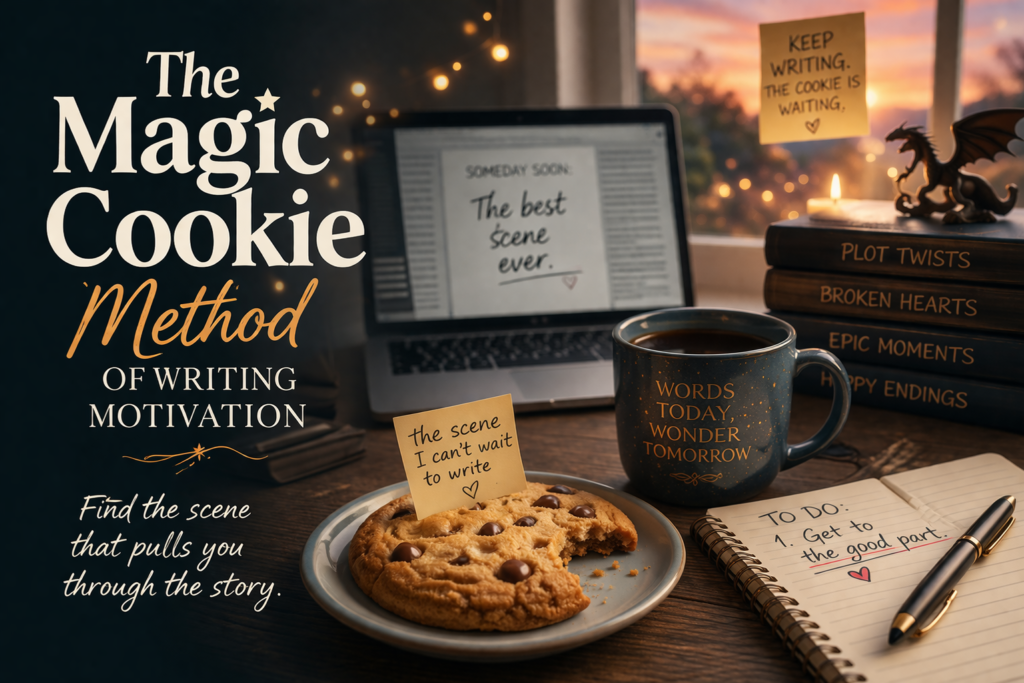
The Magic Cookie Method of Writing Motivation

When writing starts to drag, the problem often isn’t laziness or lack of discipline — it’s that you’ve lost sight of what you’re writing toward. In this post, I explore the “magic cookie” method: finding the one scene, moment, or beat in your story that excites you enough to pull you through the difficult middle. Because sometimes the best cure for procrastination is knowing there’s something wonderful waiting a few chapters ahead.

AI Just Went Mainstream. Here’s What That Means for Indie Authors

AI has officially gone mainstream—and that matters more than you think. This week on the blog, we’re looking at what the AI tipping point means for indie authors (hint: it’s not time to panic, but it is time to get your author platform AI-friendly). If your site doesn’t tell a chatbot what kind of stories you write, you’re already losing visibility.

Let’s fix that.

The Mid-Holiday Writing Retreat: Claim Your Time, Writer

Feeling like your writing time keeps getting chipped away by the holiday chaos? This post explores how to reclaim your creative space with a personalized mid-holiday writing retreat. Between Christmas and New Year is the perfect window to refocus, recharge, and write your heart out—without leaving home.

When Writing Isn’t Enough: The Harsh New Reality of Indie Income

In the early days of indie publishing, simply hitting “publish” could bring in income. Now? Discoverability is a battle, the market is saturated, and writing fiction full-time is a dream that more and more authors are having to compromise. This post digs into why multiple income streams aren’t a failure—they’re the new normal—and how indie authors can adapt without giving up.

Shopping Basket
Scroll to Top