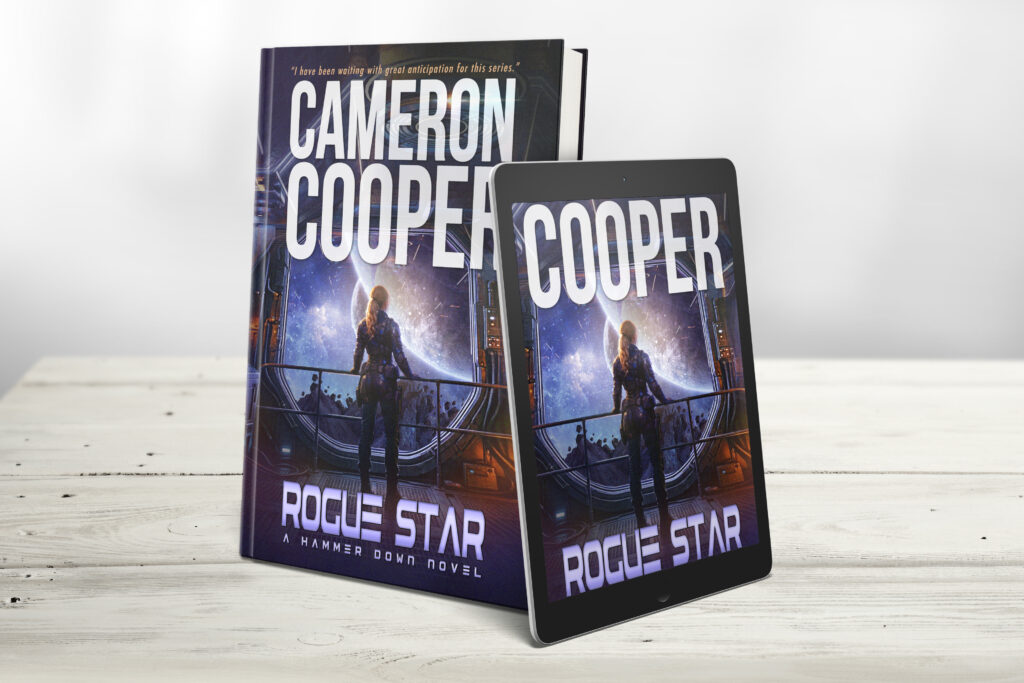
Cameron Cooper

Canada Day and Canadian Science Fiction

Canada Day always reminds me how many of my favourite science fiction writers turn out to be Canadian. From celebrated authors to passionate fandom and the Aurora Awards, Canada has quietly made an outsized contribution to speculative fiction—and it’s a legacy I’m proud to be part of.

Ridley Scott, The Dog Stars, and a Few Lingering Burn Scars

Ridley Scott is one of those directors whose films automatically move to the top of my watch list. But after the disappointment of Gladiator II, I’m approaching his return to science fiction with a little more caution than usual. Based on the trailer for The Dog Stars, though, there are plenty of reasons for optimism—from its apparent focus on human relationships to Scott’s long history of creating unforgettable science fiction worlds.

Why Every Sci-Fi Fan Should Try Photographing the Night Sky with Their Phone

Modern smartphones have become surprisingly capable astronomy cameras, making it easier than ever to capture stars, planets, and even the Milky Way. But the real appeal isn’t the technology—it’s the experience of looking up at the night sky and connecting with the vast universe beyond our everyday concerns. For science fiction readers, photographing the cosmos can be a powerful reminder of why we look to the stars in the first place.

Readers Never Actually Fell Out of Love with Space Opera

For years, science fiction seemed determined to convince us the future would be smaller, darker, and more cynical than the present. But readers never actually abandoned space opera. They still wanted starships, exploration, galactic civilizations, and futures worth fighting for. Now, as film, television, and publishing slowly rediscover large-scale science fiction, it feels like space opera is finally stepping back into the spotlight — jet packs and all.

Finding Great Books Shouldn’t Be So Hard

Finding a genuinely good book is becoming harder—not because great stories no longer exist, but because readers are being buried under rushed, low-quality content designed to game algorithms instead of move people. At Stories Rule Press, every book is still built the old-fashioned way: by real authors who care deeply about storytelling, characters, and giving readers an experience worth remembering.

Are Modern Storytellers Afraid of Happy Endings?

The new Dune 3 trailer should have filled me with anticipation. Instead, it left me uneasy. Not because Denis Villeneuve lacks skill as a filmmaker—far from it—but because the films seem determined to undercut Paul Atreides’ triumph before it ever truly lands. Which raises a larger question: Have modern storytellers become afraid of heroic endings? From Dune to grimdark fantasy to prestige science fiction, modern stories increasingly distrust hope, sincerity, and unapologetic victory. But is that really what audiences want—or simply what the industry keeps giving them?

Meanwhile, Back at Stories Rule Press…

The first quarter of the year has disappeared in a blur of drafts, edits, releases and looming deadlines—business as usual at Stories Rule Press. Mark is deep into the next Thomas Billings thriller, Tracy is preparing new fiction and nonfiction releases, Taylen is starting an all-new fantasy series, and Cameron has another big-concept science fiction novel on the horizon. Different genres, different voices, same mission: story comes first. Always.

Why Do We Keep Building Galactic Empires in Sci-Fi?

Galactic empires are everywhere in science fiction—ruling star systems with absolute power, ripe for rebellion or decay. I’ve written a few myself… and torn them down just as quickly. But why do we keep returning to this political model, especially when it’s always doomed to fall? From Dune to Foundation, and even John Scalzi’s surprisingly heartfelt Collapsing Empire, we seem obsessed with watching these mighty regimes unravel. I’ve got theories. But I’m also genuinely curious what draws readers back to the throneworld.

When Bookstores Shrink Their Shelves (Even the Digital Ones)

Barnes & Noble has begun quietly removing books from its digital shelves — not because readers don’t want them, but because the retailer wants a “cleaner,” more curated catalog. Overnight, titles vanish. Algorithms shift. Indie books get harder to find.

It’s the same old pattern: as big platforms age, they tighten the gates. The long tail shrinks. Choice narrows. And readers lose access to entire backlists, series, and genres without even realizing it’s happening.

The good news? You’re not trapped in anyone’s walled garden. Buying direct from authors keeps your books permanent, DRM-free, and untouched by corporate inventory purges — no disappearing titles, no algorithmic roulette.

Shopping Basket
Scroll to Top