
self-editing

Stop Introducing Your Characters

Stop introducing your characters. Readers don’t want a list of traits—they want the pleasure of discovering who someone is through action, dialogue, and the little details that make a story feel real. Trust your readers to connect the dots, and your fiction will become stronger, faster, and far more engaging.
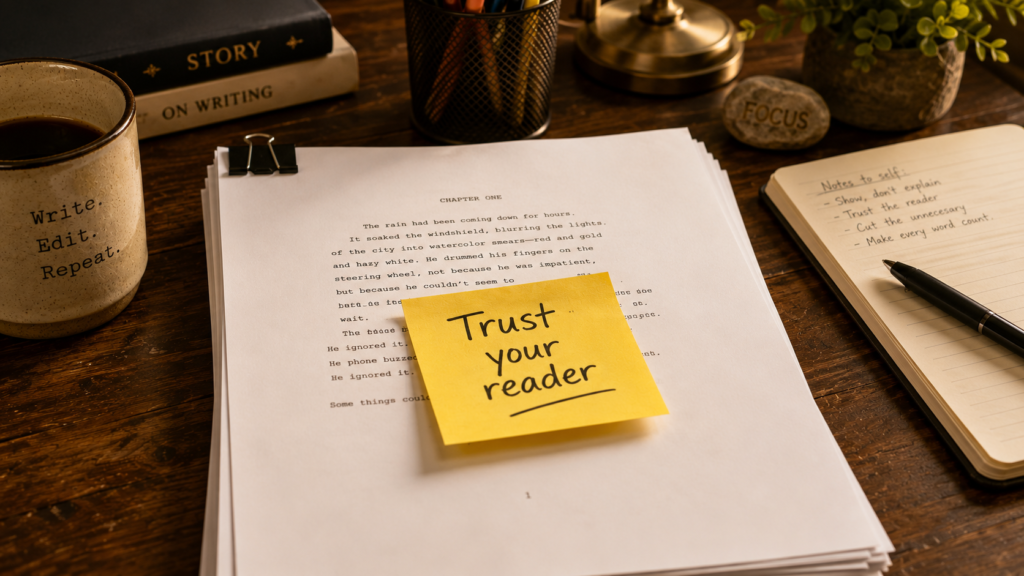
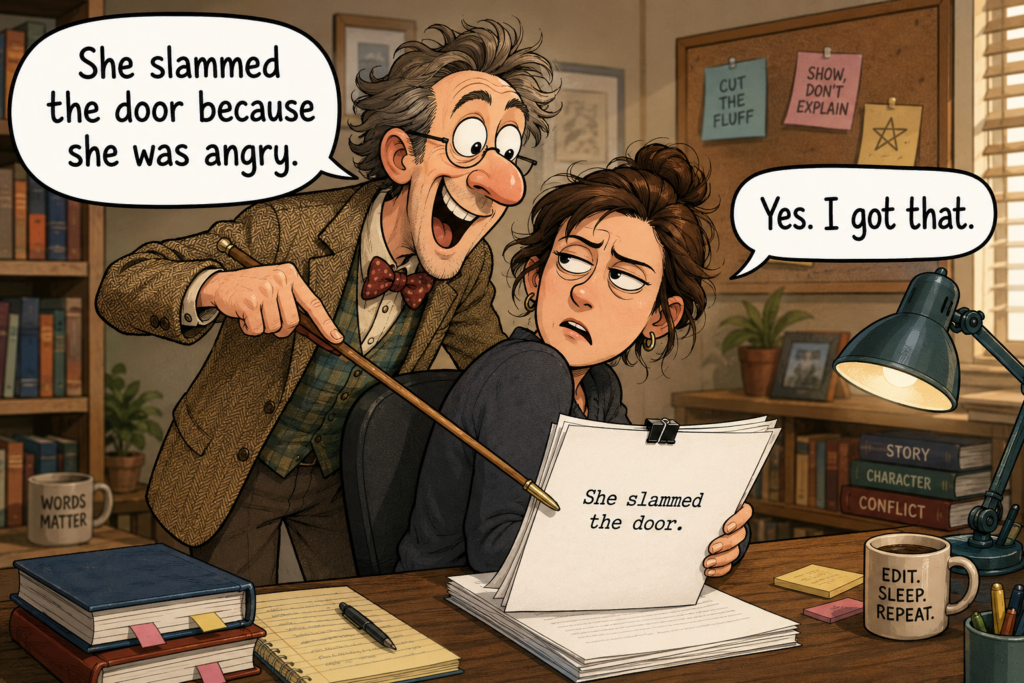
Trust Your Reader

Readers are smarter than many writers give them credit for. When we explain every emotion, clue, or joke, we take away one of reading’s greatest pleasures: discovering the story for themselves. Sometimes the best editing advice is also the simplest—trust your reader.

When the Writer Has Already Explained It

Readers are remarkably good at putting two and two together. Yet many writers, worried that a character’s emotions or motivations might not be obvious enough, add a sentence explaining what the reader has already understood. Those explanations rarely add clarity—they usually weaken the scene. Here’s how to recognize when you’re explaining the obvious, and when an explanation genuinely earns its place.

Why Good Writing Is Usually Rewriting

Most writers love writing but dread rewriting. Yet revision isn’t evidence the first draft failed—it’s where good stories become great ones. Like weeding a garden, editing isn’t about destroying what you’ve grown. It’s about giving the best parts room to flourish.

Your Personal Weasel Word List (and Why You Should Actually Use It)

Before you dump your draft on an editor—or on your future self—you should be doing a ruthless cleanup pass. That starts with your own personal Weasel Word List: those sneaky, repetitive words and phrases that dull your prose and clutter your scenes. You’ve got ‘em. Everyone does. The trick is to catch them before your editor does. Bonus: clean manuscripts make ebook compilers very, very happy (and don’t randomly explode on Kindle).

Shopping Basket
Scroll to Top