wide publishing

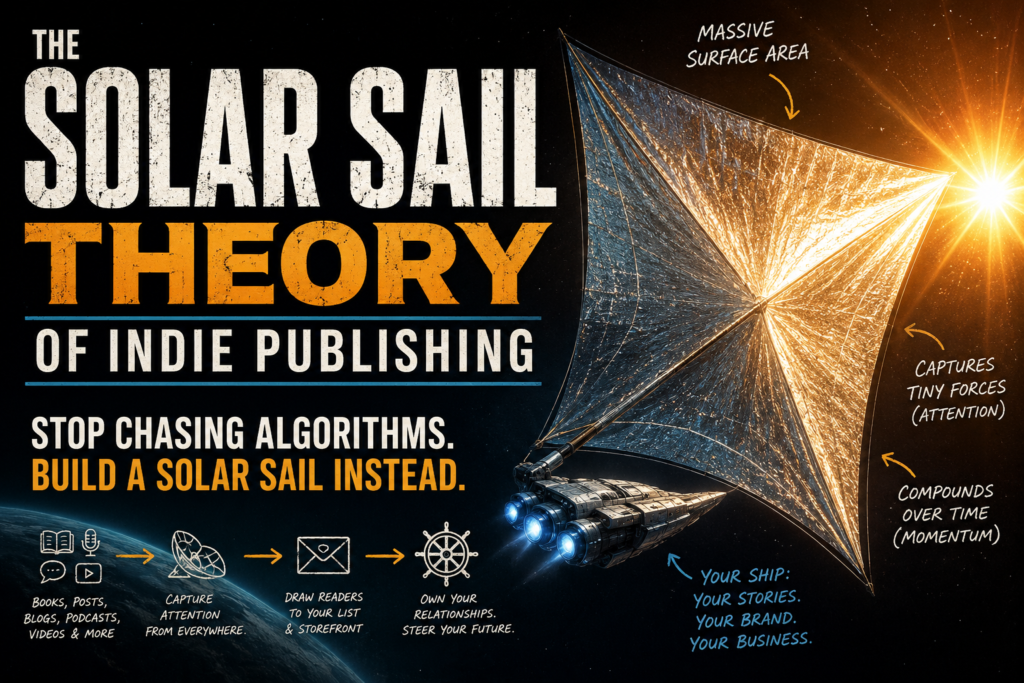
The Solar Sail Theory of Indie Publishing

Daily sales are sinking. Organic reach has collapsed. AI-generated sludge is flooding storefronts while retailers tighten their grip on discoverability. Indie authors are being told to do more of everything — more books, more ads, more social media, more platforms — while the systems underneath us become increasingly unstable and hostile.

The Solar Sail Theory of Indie Publishing offers a different approach.

Instead of chasing endless “rocket launch” marketing spikes, authors can build long-term momentum by expanding their discoverable surface area across the internet and in real life, then channeling that attention into owned reader relationships through websites, email lists, and direct sales.

A solar sail doesn’t move through explosive force. It moves by capturing thousands of tiny forces over time.

So can an indie author career.
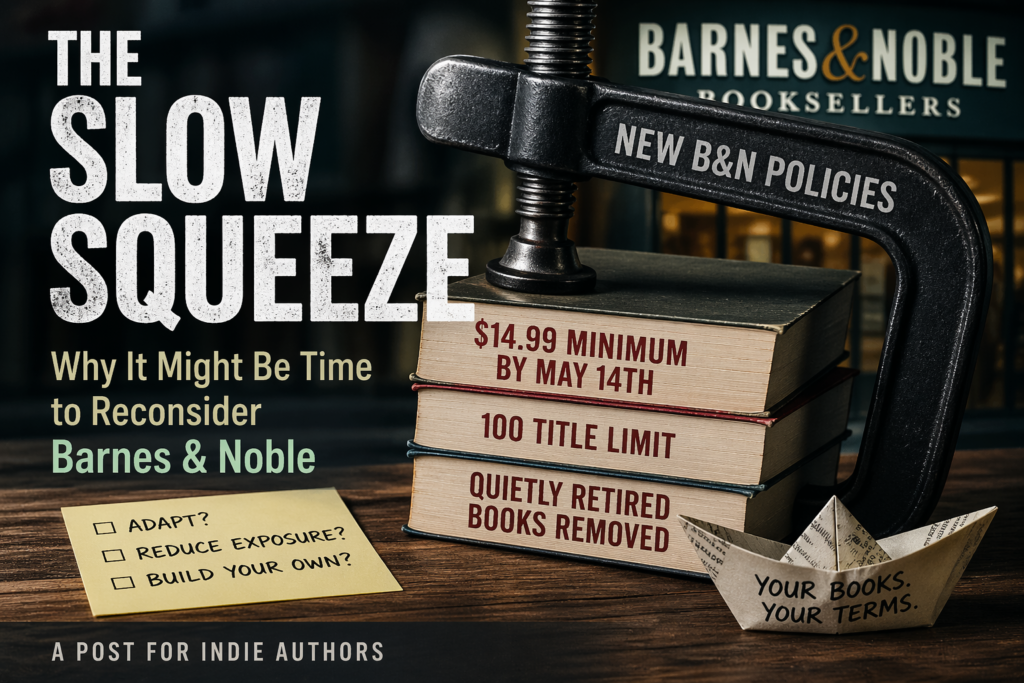
The Slow Squeeze: Why It Might Be Time to Reconsider Barnes & Noble

Barnes & Noble didn’t send a warning shot—they sent a deadline. Raise your paperback prices to $14.99 by May 14th, or your books are gone. For indie authors working in short fiction or maintaining deep backlists, that’s not a tweak. It’s a hard stop. And it’s only the latest move in a pattern that’s quietly reshaping who—and what—belongs on the platform. The question isn’t whether these changes are fair. It’s whether your publishing strategy can survive them.

“If Amazon Collapsed Tomorrow…”

What if Amazon collapsed tomorrow? Thousands of exclusive authors would lose their income overnight, and Kindle Unlimited readers would find their go-to content gone. In this speculative thought experiment, I explore how such a collapse would reshape the indie publishing landscape—for authors, readers, and the future of storytelling.

Shopping Basket
Scroll to Top