Worldbuilding

Why Bridges Are Always Trouble in Fantasy

Bridges look simple, but they quietly reshape the world around them. From Tolkien’s Last Bridge to the rainbow span of Bifröst, bridges in fantasy turn geography into decisions, create natural chokepoints, and mark the crossing from one world into another. As history shows—from Roman Corbridge to the Rhine in 1945—who controls the bridge often controls the story. Which may be why so many unforgettable fantasy moments happen right in the middle of one.
The Fantasy Divide I Didn’t Have Words For—Until Now

For years, I assumed my growing frustration with certain fantasy novels was a personal failing—shorter attention span, impatience, age. It turns out it wasn’t me at all. Fantasy has quietly split into two different kinds of books doing two very different things: story-first fiction and immersion-first fiction. Neither is wrong—but when you don’t know which one you’re reading, disappointment is almost guaranteed. This post is about naming that divide, understanding where it came from, and giving readers permission to stop blaming themselves when a “perfectly good” book just doesn’t work for them.

Why Do We Keep Building Galactic Empires in Sci-Fi?

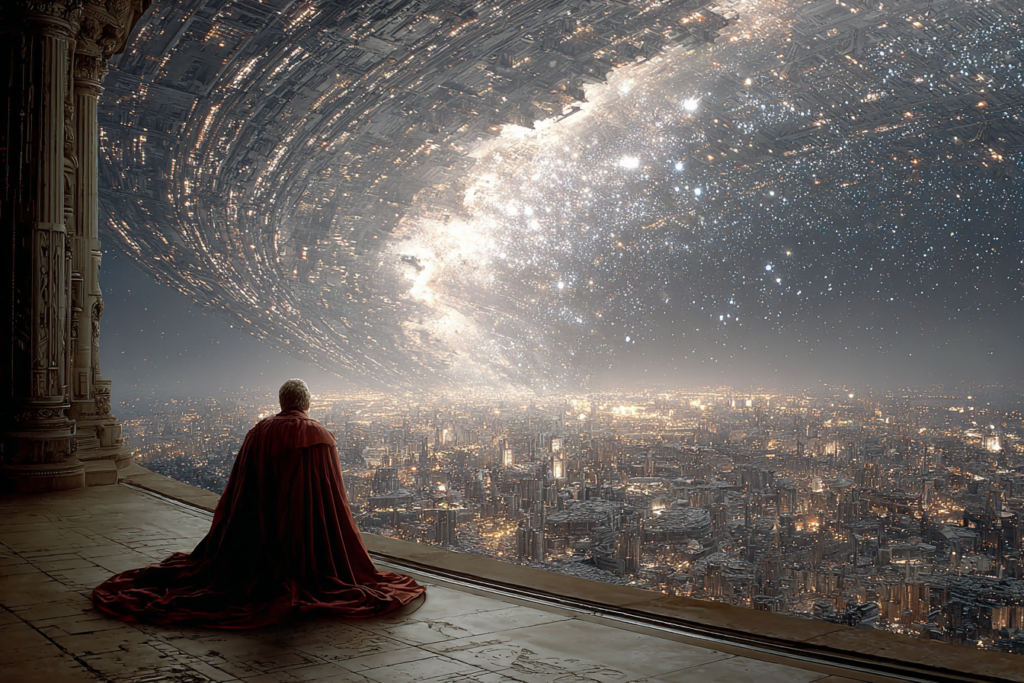
Galactic empires are everywhere in science fiction—ruling star systems with absolute power, ripe for rebellion or decay. I’ve written a few myself… and torn them down just as quickly. But why do we keep returning to this political model, especially when it’s always doomed to fall? From Dune to Foundation, and even John Scalzi’s surprisingly heartfelt Collapsing Empire, we seem obsessed with watching these mighty regimes unravel. I’ve got theories. But I’m also genuinely curious what draws readers back to the throneworld.

Pretty But Wrong: The Problem With Fantasy Town Maps

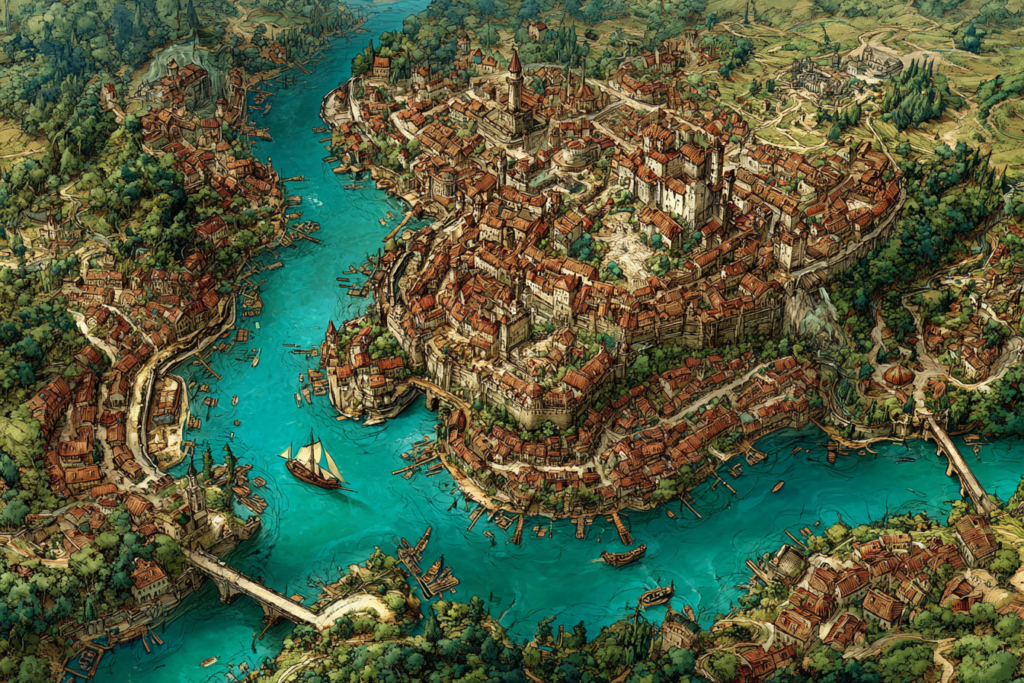
Towns don’t just pop into existence because a hero needs a tavern. They grow around water, trade routes, resources—and they carry the scars of their own history. As a writer (and a lifelong map nerd), I can’t help studying fantasy town maps like archaeological sites. If the layout doesn’t tell me why the town exists, where it started, or how it grew, then something’s missing. Let’s talk about crooked streets, suspicious bridges, and why Hobbiton is pretty but perplexing.

Beautiful Lies: The Problem With Fantasy Maps (And Why I Still Love Them)

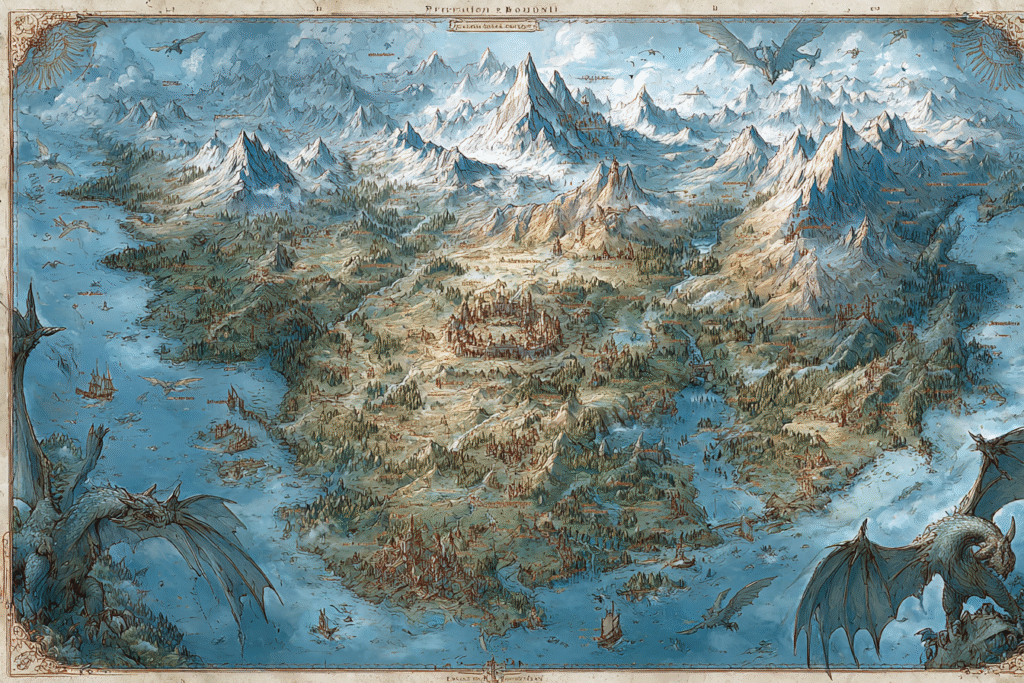
I’ve been obsessed with maps since before I knew what fantasy was. The kind you unfold like treasure, with winding rivers, tiny illegible place names, and the promise of ancient secrets hidden in the margins. In my own stories, the map comes first—and sometimes refuses to budge. Which is probably why I have strong feelings about Tolkien’s very tidy mountain problem. Let’s talk about the beauty, the lies, and the suspicious tectonics of fantasy cartography.

August 24, 410: The Day the World Changed (And Most People Missed It)

On this day in 410 AD, Rome was sacked—and the world changed. But perhaps the real marvel isn’t that Rome fell. It’s that it lasted more than a thousand years. From primitive huts to aqueducts, concrete, dentistry, and legal systems we still use today, Rome wasn’t just a city—it was civilization. This post explores what a millennium really means… and what we lost when Western Rome fell.

Shopping Basket
Scroll to Top