Books Are Usually Better. Usually.
Books are usually better—at least, that’s the pattern Mark keeps coming back to after years of reading first and watching later. But every now and then, a film breaks the rule…
Vampires are supposed to be timeless—but what happens when fashion isn’t? From immortal bad hair days to the evolution of vampire fiction itself, this post revisits an old idea with fresh eyes…and proves that no matter what publishers say, readers will never fall out of love with a good vampire.
Beltane, the ancient Celtic fire festival marking the beginning of summer, once stood as a powerful turning point in the year—a night of bonfires, fertility rites, and thinning veils between worlds. Though largely forgotten today outside neo-pagan circles, Beltane still echoes through Celtic-inspired fantasy, where it often serves as a moment of magic, transformation, and looming consequence. In this post, we explore the origins of Beltane, how it was celebrated, and why it continues to shape modern fantasy storytelling—including its pivotal role in The Rivers Ran Red and other Celtic-influenced works.
Barnes & Noble didn’t send a warning shot—they sent a deadline. Raise your paperback prices to $14.99 by May 14th, or your books are gone. For indie authors working in short fiction or maintaining deep backlists, that’s not a tweak. It’s a hard stop. And it’s only the latest move in a pattern that’s quietly reshaping who—and what—belongs on the platform. The question isn’t whether these changes are fair. It’s whether your publishing strategy can survive them.
On Earth Day, science fiction reminds us that environmental collapse is not the only possible future. From Frank Herbert’s Dune to modern Solarpunk stories like Winds of Change, SF has always offered both a warning and a hope: that science, ingenuity, and the human spirit can help us protect our one blue world—and perhaps one day carry that wisdom to the stars.
In this new novelette, Cameron Cooper delivers a thought-provoking and emotionally resonant story that explores the fragile nature of memory—and what happens when it begins to fail on a broader scale.
This is not a story of sudden catastrophe, but of quiet erosion. As memories begin to slip and connections fade, the question becomes not just what is being forgotten—but who.
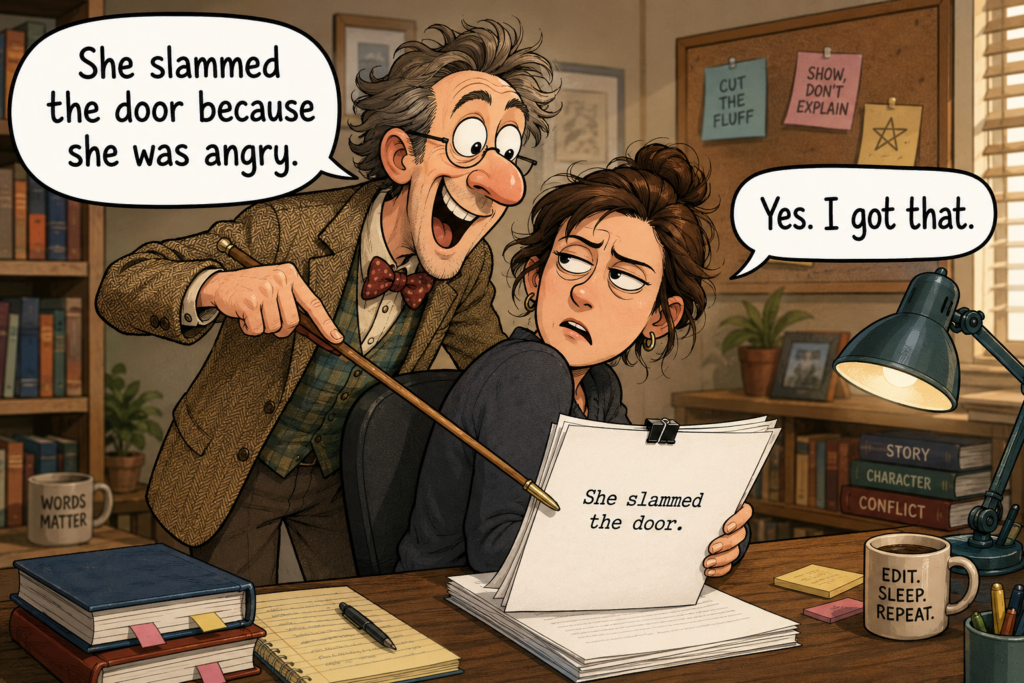
Writers collect craft books the way other people collect unread classics and half-finished notebooks: with tremendous optimism and the vague sense that owning them counts as progress. But a few books earn their place beside the desk because they’re not just inspiring—they’re useful. In the first of this series, Mark looks at why The Story Grid has become one of the writing books he returns to again and again: because when a manuscript goes sideways, this is the book that explains why.
This weekend, Mark is trading the keyboard for lumber, screws, and soil as he builds twenty raised beds in the backyard. There’s a quiet satisfaction in work you can see at the end of the day—and a surprising connection between gardening and writing. Both are acts of optimism: you do the work now, trust the process, and hope something good will grow.
Fantasy author Danielle L. Jensen recently pushed back against the “romantasy” label, arguing that it reduces complex fantasy novels to “there was kissing, therefore clearly dragons are optional.” She is not alone. Fantasy romance has always demanded that writers master two genres at once: not just the emotional arc of a romance, but also worldbuilding, magic, politics, danger and impossible choices. So why has a catchy nickname managed to make the genre sound smaller, sillier and less serious than it really is?
There was a time when fantasy looked outward, toward lost kingdoms and blank spaces on the map. Today, with the world thoroughly mapped and disappointingly short on hidden plateaus full of dinosaurs, fantasy has shifted its secrets elsewhere. Now the lost world waits behind a locked door in the back of a library, or on a shelf in a bookshop that was not there yesterday.