publishing strategy

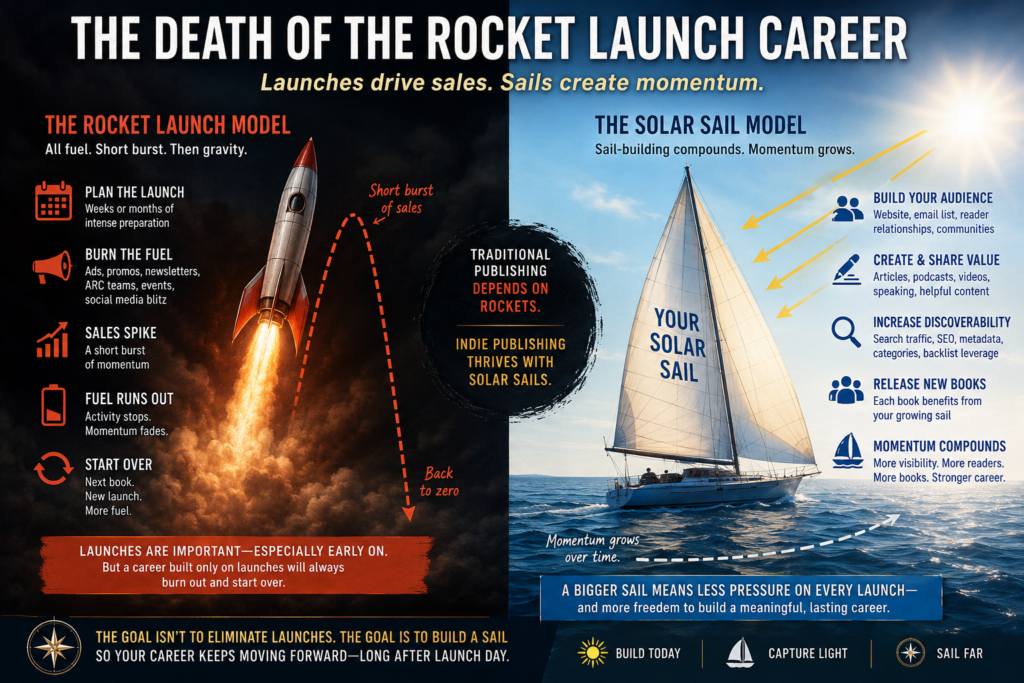
The Death of the Rocket Launch Career

Book launches aren’t dead. But the idea that every new release must carry your entire publishing business is fading fast. Traditional publishing still depends on launch velocity, but indie authors operate under different physics. Solar Sail Theory shifts the focus from short-term sales bursts to building long-term visibility, discoverability, and audience reach. The bigger your sail, the less any single launch can make—or break—your career.

The Most Valuable Reader You Will Ever Have

Discovery matters. Visibility matters. But the most valuable reader you’ll ever have isn’t the one who finds your book. It’s the one who chooses to stay connected after they do. Direct sales aren’t just about revenue—they’re about building relationships that can outlast platforms, algorithms, and marketplace changes.

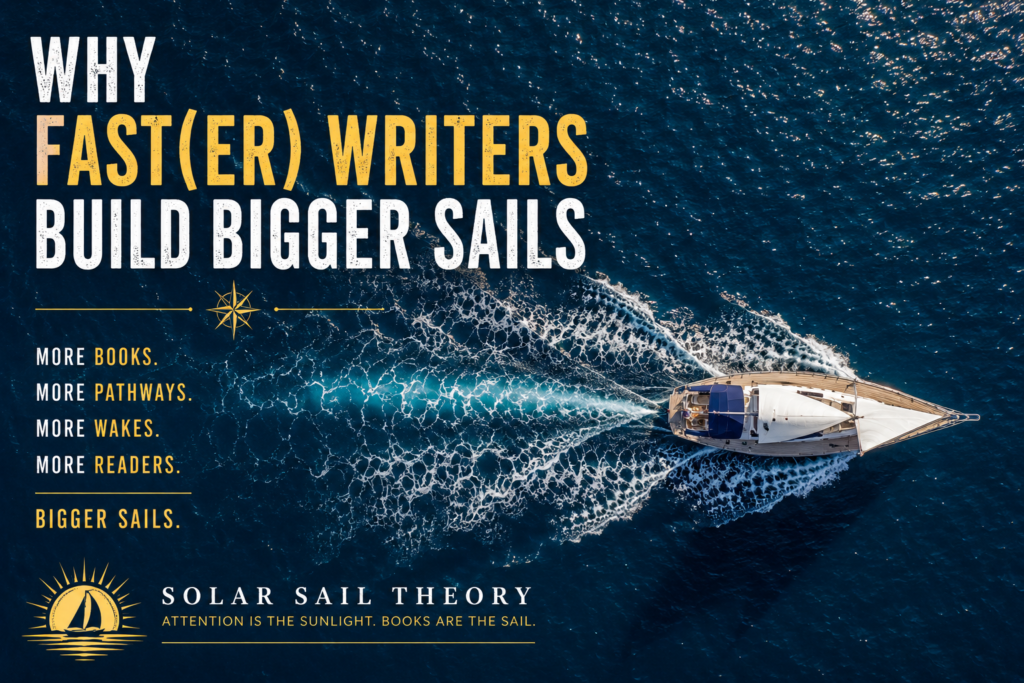
Why Fast(er) Writers Build Bigger Sails

One of the oldest arguments in publishing is whether writers should write quickly. Solar Sail Theory approaches the question from a different direction. Every book you publish becomes a discoverability asset: another doorway for readers, another wake spreading across the internet, and another opportunity for luck to find you. Fast(er) writers don’t just produce more books—they build bigger sails.

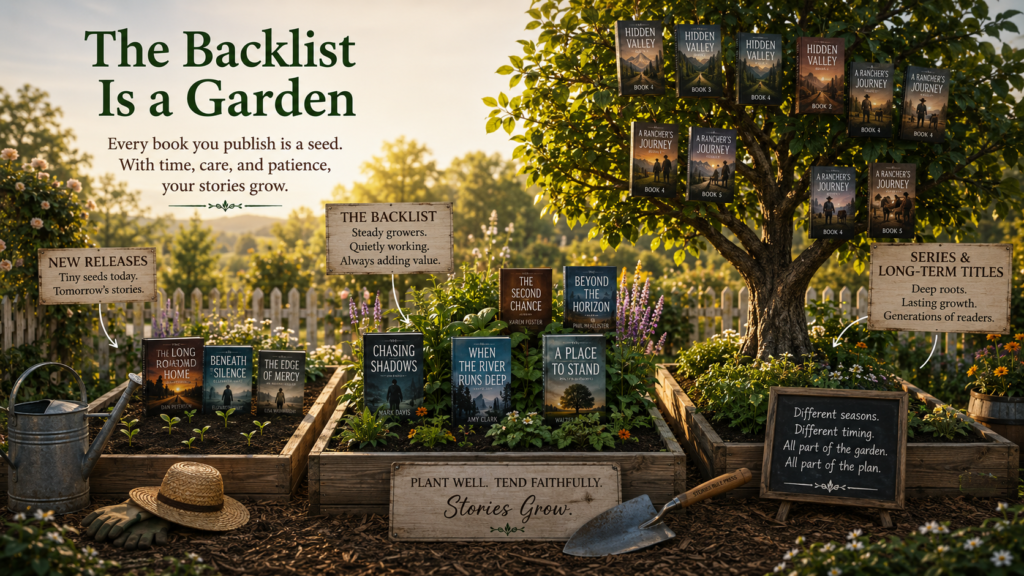
The Backlist Is a Garden

We spend a lot of time talking about launches in publishing. Launch week. Launch numbers. Launch strategies. But publishers eventually learn something authors often overlook: books aren’t just products. They’re plants. Some flourish immediately. Others take years to reach their full potential. The real strength of a publishing business isn’t found in a single launch—it’s found in a backlist that keeps growing, season after season.

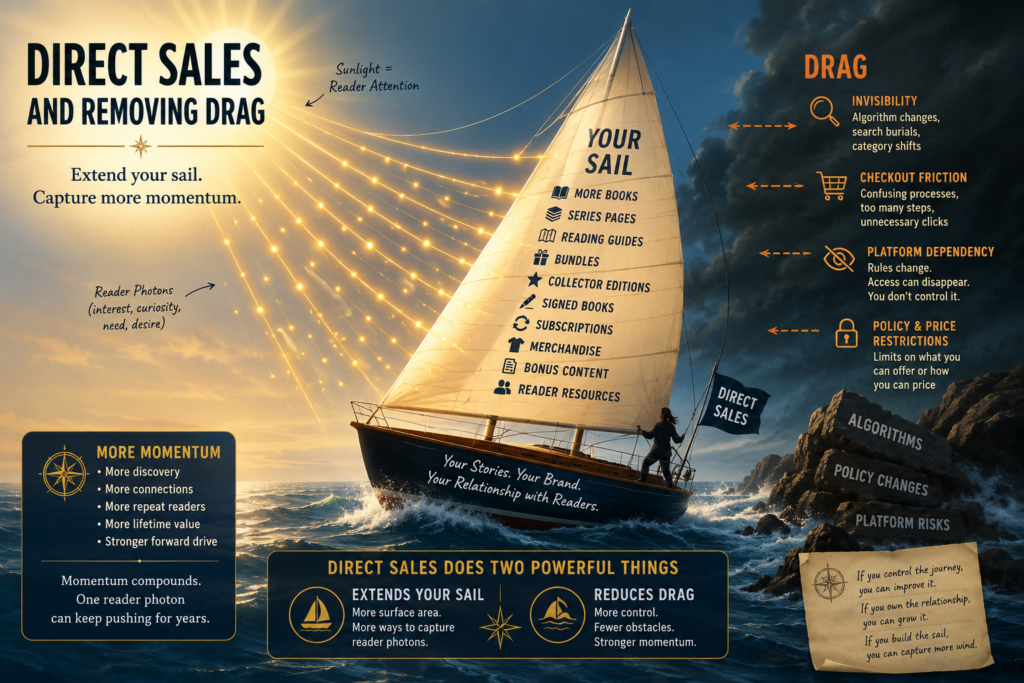
Direct Sales and Removing Drag

Selling direct isn’t just about keeping a larger share of the sale. From a Solar Sail Theory perspective, direct sales does something even more valuable: it extends your sail and reduces drag at the same time. Every product page, bundle, subscription, and reader resource becomes another opportunity for discovery, while direct relationships with readers create momentum that can continue for years. At the same time, selling direct reduces your dependence on retailer algorithms, visibility changes, and platform policies. Sometimes the best business decisions solve more than one problem at once—and direct sales is one of them.

Why We Don’t Chase Trends at Stories Rule Press

Trends come and go. One month it’s a trope, a cover style, or a subgenre everyone is chasing; six months later, the industry has already sprinted off after the next shiny object like a Labrador with three tennis balls and no self-control. At Stories Rule Press, we’ve made a different choice. We pay attention to the market, but we don’t build our catalogue around trends. We start with the story—and whether it’s the kind of world a reader can disappear into and want to return to years later.

Binge or Drip? The Serial Reading Argument No One Actually Wins

There are two kinds of readers in the world.
The kind who says, “Just one more chapter,” and resurfaces hours later dehydrated and emotionally compromised.
And the kind who prefers the slow burn—one episode a week, time to speculate, time to argue, time to savor.

The internet insists one of these is correct.

They’re wrong.

This isn’t a format war. It’s a control issue—and Credible Threat is about to give both camps exactly what they want.

“If Amazon Collapsed Tomorrow…”

What if Amazon collapsed tomorrow? Thousands of exclusive authors would lose their income overnight, and Kindle Unlimited readers would find their go-to content gone. In this speculative thought experiment, I explore how such a collapse would reshape the indie publishing landscape—for authors, readers, and the future of storytelling.

Shopping Basket
Scroll to Top