

Books Are Usually Better. Usually.
Books are usually better—at least, that’s the pattern Mark keeps coming back to after years of reading first and watching later. But every now and then, a film breaks the rule…
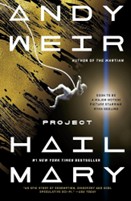
Books are usually better—at least, that’s the pattern Mark keeps coming back to after years of reading first and watching later. But every now and then, a film breaks the rule…
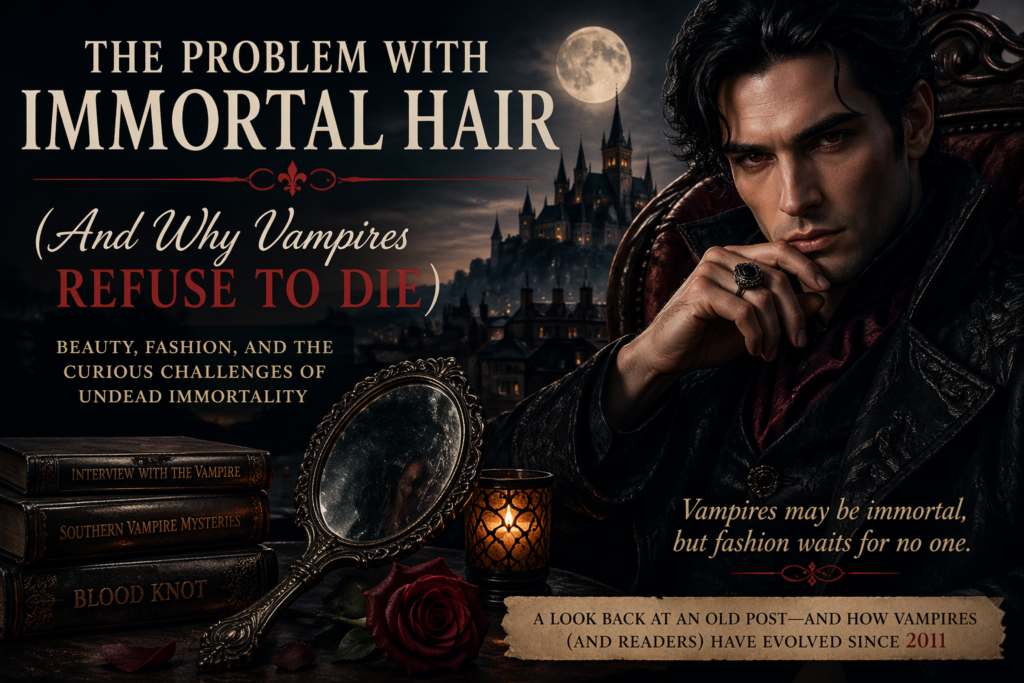
Vampires are supposed to be timeless—but what happens when fashion isn’t? From immortal bad hair days to the evolution of vampire fiction itself, this post revisits an old idea with fresh eyes…and proves that no matter what publishers say, readers will never fall out of love with a good vampire.
Trends come and go. One month it’s a trope, a cover style, or a subgenre everyone is chasing; six months later, the industry has already sprinted off after the next shiny object like a Labrador with three tennis balls and no self-control. At Stories Rule Press, we’ve made a different choice. We pay attention to the market, but we don’t build our catalogue around trends. We start with the story—and whether it’s the kind of world a reader can disappear into and want to return to years later.
There’s a point in many manuscripts where the story quietly pulls back. The conflict softens, the dialogue becomes safer, and characters make the reasonable choice instead of the revealing one. The result is a manuscript that is technically good—but often forgettable. The moments readers remember are rarely the comfortable ones.
Lately, Tracy and I have been watching The Americans, and it has completely hooked us. Not because of the spy story—although that’s excellent—but because everything about it feels real. The relationships are messy, the choices are complicated, and the 1980s setting feels lived in instead of staged. It’s the kind of show that doesn’t just entertain you for an hour. It lingers afterward and leaves you wondering what you would have done in the same situation.

The most common problem I see in manuscripts right now isn’t bad prose or weak dialogue. It’s stories where the protagonist could simply walk away—and nothing meaningful would happen. If your character can shrug and go home, they probably should. So why don’t they?

Some movies adapt a book. A rare few understand it. From Stand By Me to The Bourne Identity, these are five films that prove story always matters more than spectacle, budget, or special effects.
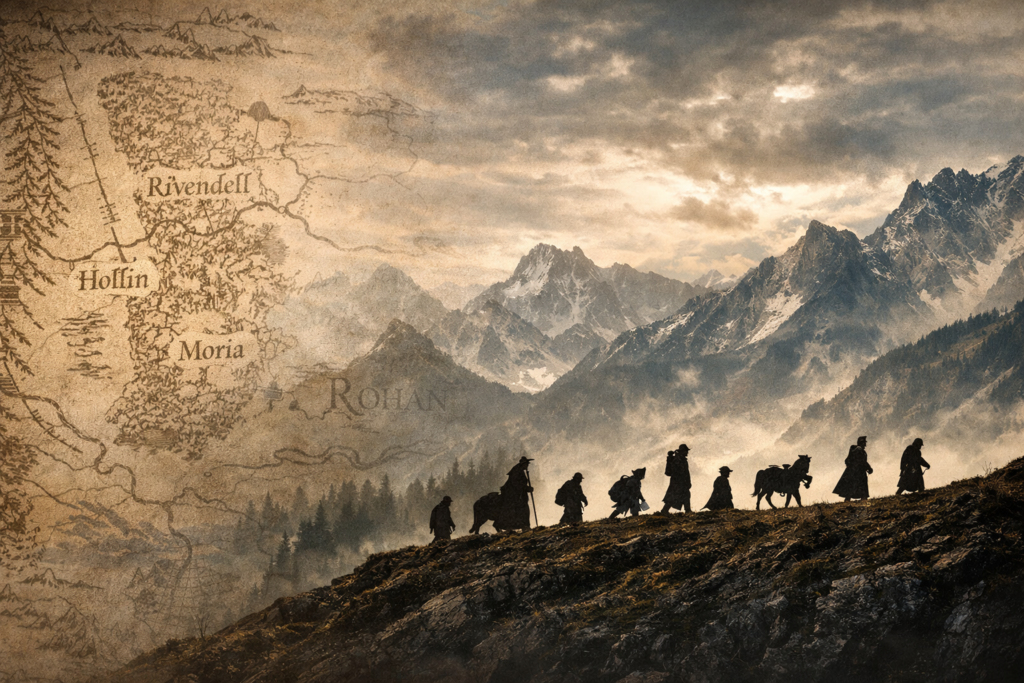
Fantasy maps have the same problem as those diagrams of the Earth and the Moon: they make impossible distances look deceptively small. A quarter-inch on the map between Rivendell and Hollin hardly seems worth mentioning—until you realise the Fellowship spent weeks walking it. Why does Middle-earth feel so much larger than other fantasy worlds, even worlds that are technically bigger? The answer may lie not in the map itself, but in the long, cold, weary miles between the names.
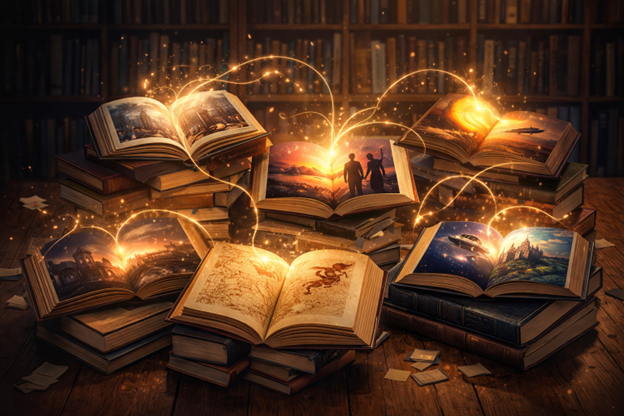
What if the best story you’ll read next isn’t by the author you already know?
That’s the thinking behind a new direction at Stories Rule Press. Instead of focusing only on individual authors, we’re starting to build collections around something bigger: the kinds of stories readers love to fall into.
If you love thrillers, romance, fantasy, suspense—or any story that keeps you reading long past your bedtime—you may be missing books you’d love simply because you haven’t met the other writers behind them yet.
That’s about to change.
Why does Stand By Me still hit forty years later when so many stories vanish almost as soon as the credits roll? Because it isn’t built on spectacle or plot twists. It’s built on emotional truth. Four boys, one long walk, and a story that trusts us to care about the people more than the destination. That’s a rare thing. And maybe that’s why it still works.