Mark Posey

Why Your Scene’s Setting Matters More Than You Think

Setting isn’t wallpaper. It’s the emotional engine under every scene you write. A confession uttered beneath stained-glass saints is a completely different moment than one whispered in the soft half-light of a bedroom — same words, wildly different meaning. If a scene feels limp, nine times out of ten the setting is the culprit. Make the room work just as hard as the characters, and suddenly the whole story sharpens.

Three Weeks Until Christmas… Already?!

Christmas has a talent for going delightfully off the rails — and honestly, that’s half the charm. This week on Mark’s blog, we’re diving into the beautifully imperfect moments that make the season unforgettable. From last-minute chaos to wobbly traditions and the kind of family stories that only happen when everyone embraces the madness, it’s all fair game. What’s your most memorable Christmas — heartwarming, disastrous, or somewhere in between?

Mind Your @#$%& Mouth: Swearing in Fiction (And How Not to Mess It Up)

Writers love to worry about swearing — usually more than their characters do. The truth? Profanity isn’t “good” or “bad.” It’s a tool. A sharp one. Used well, it cuts cleanly through tension, reveals character, or snaps a moment into focus. Used poorly, it just bleeds all over the page.
In this post, Mark breaks down when swearing works, when it absolutely doesn’t, how genre affects your choices, and why every curse word has to be earned. If your characters are going to swear, make sure they mean it.

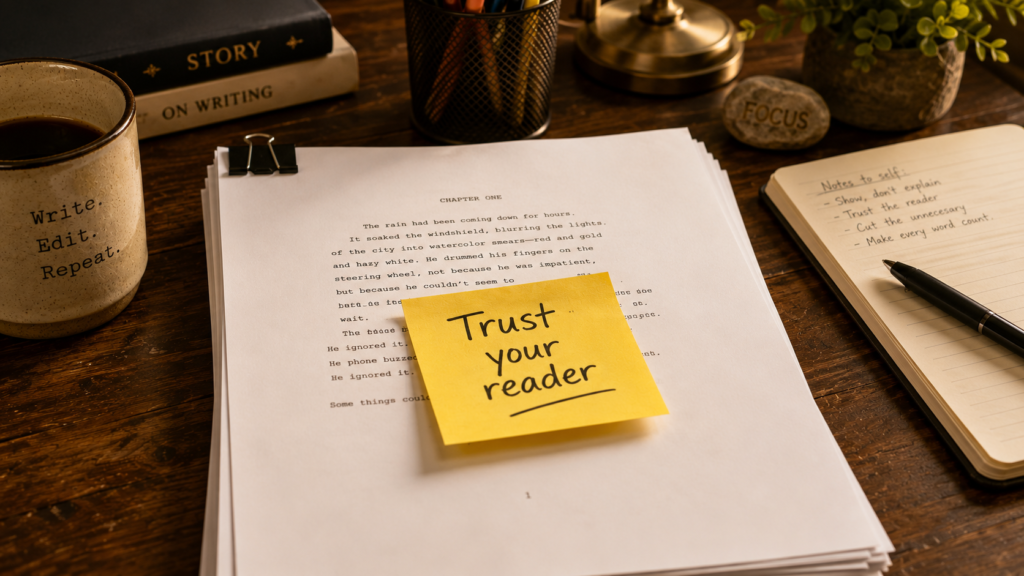
Trust Your Readers (They’re Smarter Than You Think—Usually)

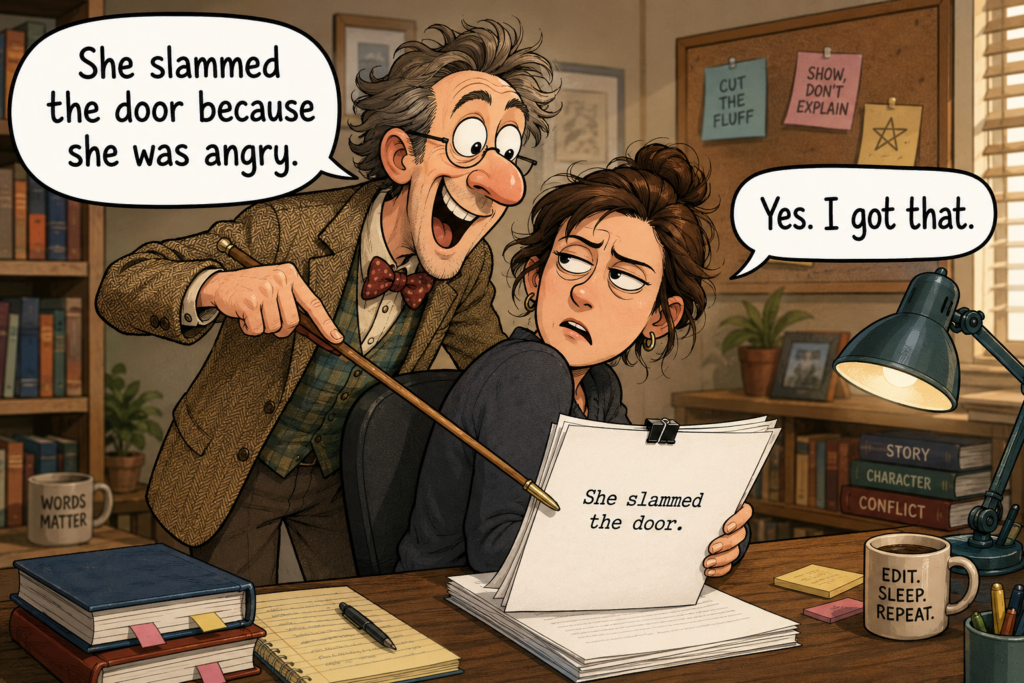
Readers aren’t toddlers in need of hand-holding—they’re highly skilled story-decoders who’ve been reading between the lines since grade school. They don’t need your theme underlined, highlighted, and surrounded by interpretive dance. In fact, the moment you over-explain, you kill the magic. Trust them to catch the subtext, feel the tension, and assemble the clues. Not only will your story be stronger for it—your readers will love you for letting them play along.

Curl Up, Warm Up, Read On

There’s a particular kind of magic that happens the moment you sit down in front of a fire with a warm drink and a good book. Suddenly the to-do list fades, the world shrinks to a soft glow, and some ancient part of your brain settles in with a satisfied Yes. Good. Time to read. In that light, mysteries get twistier, romances get swoonier, and even instruction manuals start looking a little seductive. It’s the universal ritual of readers everywhere — curl up, warm up, read on.

New Jacobine Story from Mark Posey.

Today, SRP author Mark Posey has released a new short story in his Jacobine series, “The Things that Shall Come Upon Them”, which is included in the SRP anthology, A Gathering of Stories: Lantern Festival.

Old School vs New School Spy Thrillers

There was a glorious time — not as far back as dinosaurs, but far enough that you had to physically turn a page — when spy thrillers were built on tension. Real tension. The slow-burn, creeping dread variety that made you lean forward until you realized your spine was doing yoga poses you didn’t sign up for.

These were the days of The Bourne Identity, the early Bond novels, and le Carré’s Tinker, Tailor, Soldier, Spy — stories powered by paranoia, not pyrotechnics. Today, spy thrillers have traded that slow dread for weaponized anxiety and smartwatch hacking. But both eras have something to teach us about how to build suspense that sticks.

A Thanksgiving State of Mind

Thanksgiving comes twice a year when you straddle both sides of the border — one quieter, one a full-blown production. But whether it’s turkey, pasta, or chili dogs, the heart of it never changes. Gratitude isn’t about the meal or the decor. It’s about the people at your table — literal and metaphorical — and remembering how lucky we are to have them.

“What’s It About?” — The Question That Makes Everything Easier

Writers love to add more scenes, more twists, more explosions… but half the time the real problem is simpler: we don’t actually know what the story is about.
Once you can answer three deceptively basic questions — What’s it about? What will the protagonist learn? How will they change? — the whole book snaps into focus. Plot becomes purposeful. Scenes stop wandering. And suddenly you’re not writing 300 pages of Stuff That Happens™ — you’re writing a story with meaning.

Shopping Basket
Scroll to Top