

From SRP author Tracy Cooper-Posey;
One of the odd but delightful quirks of writing in the Internet age is the phenomenon of beta readers. Those brave, enthusiastic souls who love the genre but have zero interest in writing themselves. They step up to read an author’s work before an editor ever lays eyes on it. These readers are the front line, the early warning system, the “is this any good or am I losing my mind?” checkpoint.
Writers often reach out to beta readers for reassurance: “Does this story hold up? Are the characters believable? Is the big twist really a surprise?” Sometimes you just want to know the book doesn’t suck. (It’s a legitimate concern. Trust me.)
Now, I don’t always use beta readers. Partly because finding good ones is harder than finding an Aussie who drinks decaf. There are never enough to go around, and those that exist get passed around like priceless heirlooms. But when I write something outside my usual wheelhouse—something a bit off the beaten genre track—I’ll reach out.

And when I wrote Ningaloo Nights, (extra steamy — watch out!) I knew I needed a beta reader. The book is pure Australia. Thick with Aussie culture, language, landscapes. I had to make sure it didn’t read like a foreign language to my largely North American audience. I’ve had running arguments with editors for years over Aussie words they insist “aren’t real.” (They are. Just…not in your backyard.)
But here’s the kicker: none of the beta readers batted an eyelash over the language. They all loved it. They understood it. Some even wanted to pack their bags and fly off to the outback immediately. Preferably with someone resembling Mason Hayward, the book’s hero. (No judgment.)
What did surprise them, though? The sheer danger of the setting.
More than one asked, with polite disbelief, “You don’t really have to be that careful out there, do you? Surely it’s not still that dangerous?”
Ah. But it is.
In the book, Mason packs all their water to take with them because there is none to be had in the wilds of Derramawan. He and Sherry travel only during the cooler parts of the day and into the night, because during the heat of the day, the fuel can literally evaporate before it reaches the engine block. They follow old tire tracks across dust plains because there are no road signs. Sunstroke is a real and present threat. These aren’t plot devices. They’re standard survival practices.
How do I know? Because I lived it. I grew up with parents who travelled through the Ningaloo region. This wasn’t imagination. It was memory.
To the untrained eye, the Australian outback looks flat, brown, and boring in the summer. Nothing moves but heat haze and the occasional snake. There aren’t even crocs in the west. Too dry for them. But that stillness hides an unforgiving landscape that can kill you twelve different ways before lunch if you don’t know what you’re doing.
And yet.
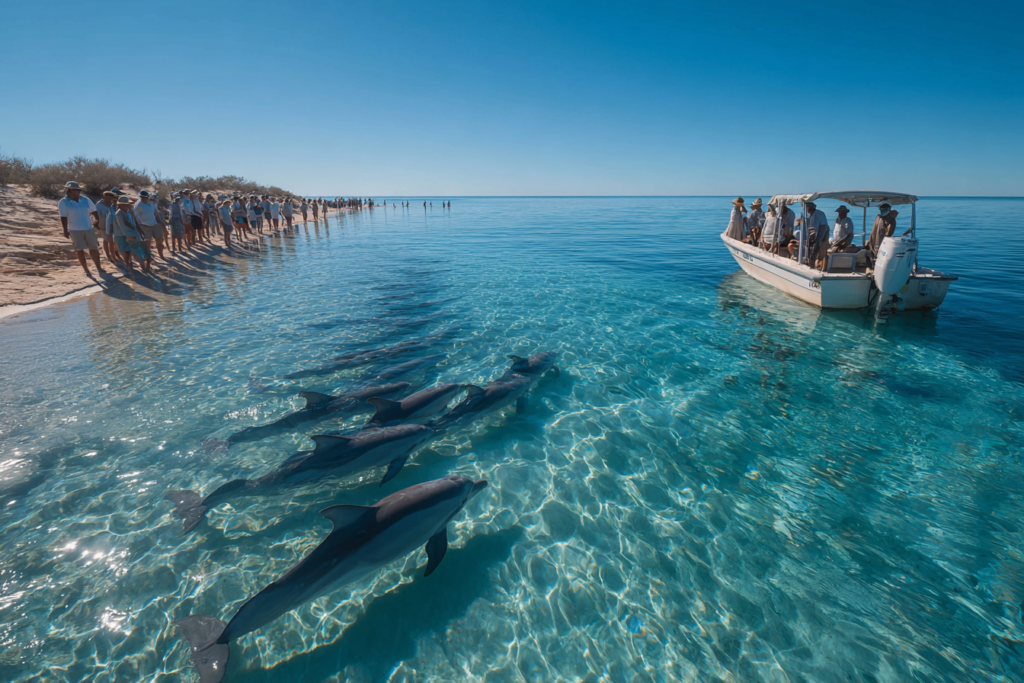
Ningaloo and its reef are jaw-droppingly beautiful. It’s one of the most stunning, untouched marine ecosystems left on Earth. Plug “Ningaloo Reef” into Google Images, and you’ll see what I mean. It’s paradise. Hidden away in a corner of the world most people have never heard of.
You can hand-feed dolphins there. Swim with whale sharks. Snorkel over reefs so close to the surface you can practically walk on them. Ningaloo outshines the Great Barrier Reef in sheer, unspoiled beauty. And yes, it’s real. The name isn’t a punchline or a made-up fantasy name. It’s as real as sand in your socks.
Which brings me to the last point—because I have seen reviews that make fun of the name. “Ningaloo? Really?” Yep, really. Australian place names often sound made up to the untrained ear. Woolloomooloo, anyone? But they’re part of the charm. And Ningaloo is a jewel of a place, remote and still hard to get to. Which is part of why it’s still so magical.
So, if you’ve read Ningaloo Nights and wondered if I was exaggerating the dangers, I wasn’t. The drama is real, the survival tips are legit, and the landscape is both deadly and breathtaking.
And it’s still waiting for you.
Just remember to bring your own water.

Tracy Cooper-Posey
SRP Author